
 RUSAGARA MUVUNANKIKO Valens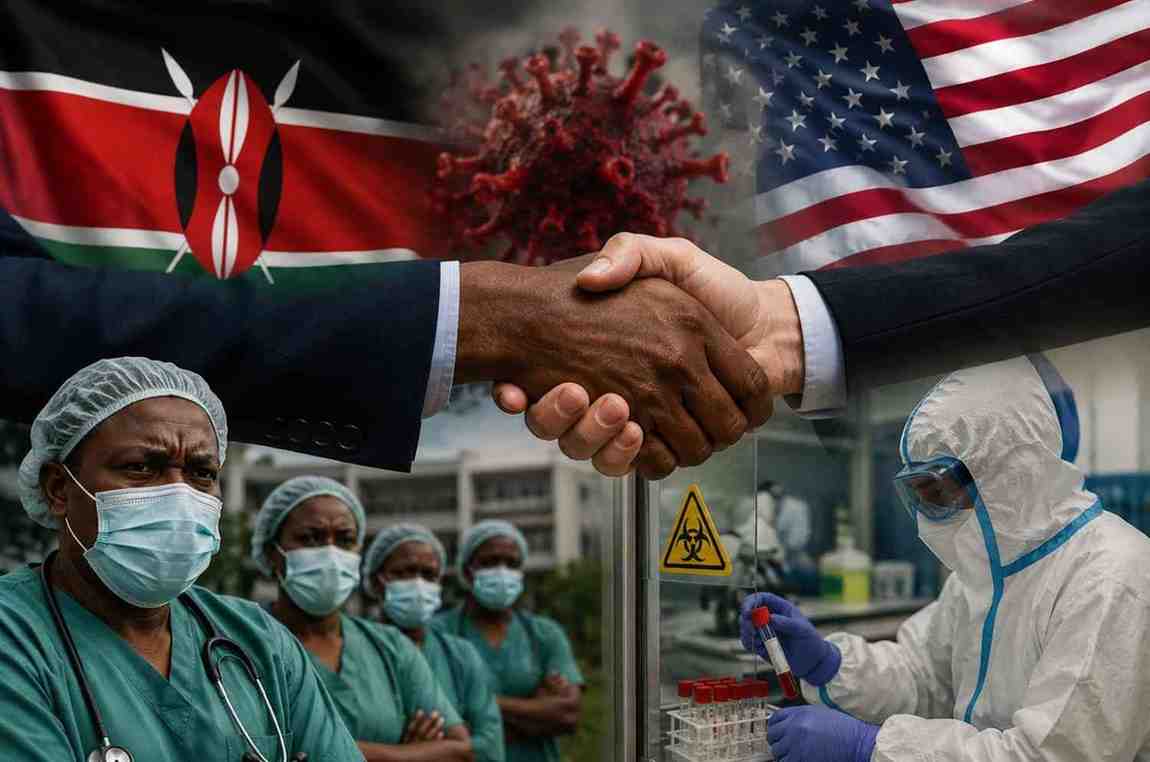
Kenya has agreed to let the United States build an Ebola quarantine facility on its soil. The country’s doctors are angry. The government says it made the right call. And the argument between them is getting louder by the hour.
Kenya gave written approval for the U.S. to open a quarantine facility for Americans exposed to Ebola with access granted to land at an air force base in Laikipia, in central Kenya. The agreement was made quietly without public debate and only came to light after American newspapers broke the story.
Why this is happening now
The Ebola outbreak in Central Africa is getting worse. The rare Bundibugyo strain of Ebola is spreading fast in the Democratic Republic of Congo and Uganda. The World Health Organization has declared it a global health emergency. Congo alone has recorded over 900 suspected cases and more than 220 suspected deaths.
The Trump administration did not want infected Americans flying home. The Pentagon was told to build a field hospital at Laikipia within one week. It will start with 50 beds and can grow to 250.
Secretary of State Marco Rubio was clear about why. “We cannot and will not allow any cases of Ebola to enter the United States,” he said at a Cabinet meeting.
That one sentence made Kenya’s doctors furious.
The Doctors’ anger
The Kenya Medical Practitioners, Pharmacists and Dentists’ Union known as KMPDU, came out swinging. Their Secretary-General, Dr. Davji Bhimji Atellah, said the government was putting Kenyans at risk to protect Americans.
“We will not sit back and watch Kenya be treated as a containment colony for a lethal pathogen that we did not generate,” Dr. Atellah said.
His argument was simple and direct: if Ebola is too dangerous to bring to America, why is it safe to bring to Kenya? “If the U.S. believes a 12-hour flight home is too dangerous, by what logic is it safe to fly infected people into Kenyan airspace?” he asked.
The anger grew even stronger when the union learned that the facility would be run entirely by American health workers not Kenyan ones. Kenya already has a shortage of over 100,000 health workers. Thousands of qualified Kenyan doctors are unemployed or working on poorly paid short-term contracts.
“Our hospitals lack basic medicines and equipment. Yet the government wants to bring a deadly disease here to serve a foreign country’s interests,” Dr. Atellah said. “We will not accept an apartheid health system on Kenyan soil.”
KMPDU gave the government 48 hours to publish the full agreement or face a nationwide doctors’ strike.
The Government’s response
The Ministry of Health hit back strongly. Dr. Ouma Oluga, the Permanent Secretary in the Ministry of Health, said Kenya was not a victim in this story. He argued that Kenya is one of the best-prepared countries in Africa when it comes to handling dangerous diseases and that is exactly why it was chosen.
“We are taking all measures to protect Kenyans and protect Kenya from international health outbreaks,” Dr. Oluga said.
He pointed to Kenya’s track record. “In 2015, Kenya sent 157 health experts to Sierra Leone to help fight Ebola. I was personally part of a team of over 90 experts at the DRC and Rwanda border in 2013. No other country in the region has this kind of experience,” he said.
On hospital readiness, Dr. Oluga said Kenya was well equipped. “We have the highest isolation capacity in the country, much of it built during COVID. We have already trained 2,200 health workers,” he said.
He also praised Kenya’s national laboratory. “KEMRI is the fourth most prepared infectious disease laboratory in the world. Right now, neighbouring countries are sending their Ebola samples to KEMRI for confirmation,” he said.
Dr. Oluga added that the world already trusts Kenya as a regional health hub. “The WHO is setting up a logistics centre here. The Africa CDC has chosen Kenya as its base for the entire continent,” he said.
Two very different pictures
Dr. Oluga and Dr. Atellah are painting two very different pictures of the same country.
Dr. Oluga sees a strong experienced nation stepping up when the world needs it most. Dr. Atellah sees a government that cannot pay its own doctors or stock its own hospitals, yet is willing to take on one of the world’s deadliest viruses to please a foreign superpower.
Flight trackers have already spotted unusual aircraft activity at Laikipia Air Base suggesting preparations may already be underway. Kenya had asked for the facility to be open to people of all nationalities not just Americans. Whether that request was granted remains unclear.
The 48-hour clock is ticking. The government must now decide whether to open its negotiations to the public or face a health system brought to a halt by the very doctors it is counting on.
“Kenya is a sovereign republic, not a place to dump other people’s problems,” Dr. Atellah said.
Dr. Oluga believes Kenya can handle what is coming. The question is whether the country’s exhausted, underpaid doctors will be standing beside him when it arrives.

 Ivan Damascene Iradukunda