
 Muhire Obed
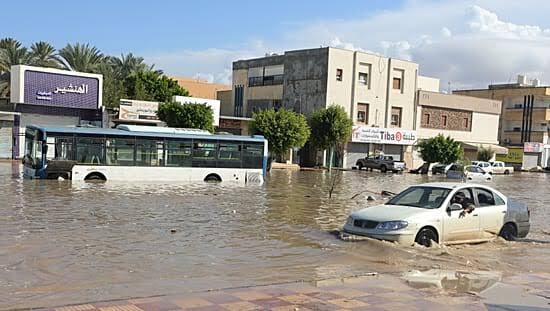
Senegal is facing renewed questions about flood preparedness after torrential rainfall killed at least five people, disrupted transport and forced the government to postpone the start of the school year nationwide. Although classes resumed on 12 October, the consequences of the flooding remain visible, with approximately 7% of the country’s schools still experiencing flood-related difficulties at the time of reopening.
The heavy rains, which affected several regions between 2 and 5 October, severely disrupted daily life in Dakar and surrounding communities. Floodwaters submerged roads, entered residential areas and damaged buildings, prompting emergency operations to remove standing water, restore transport routes and protect essential services. The flooding also highlighted the vulnerability of urban infrastructure to intense rainfall.
The scale of the disaster is illustrated by meteorological measurements recorded on 4 October. Dakar’s Yoff weather station recorded 137.5 millimetres of rain in 24 hours, making it the wettest October day in the station’s records dating back to 1946. The total was also the third-highest daily rainfall recorded there since 1981.
Other parts of the Dakar metropolitan area experienced substantial rainfall. Rufisque recorded 142 millimetres, while Ngor received 116.3 millimetres, Keur Massar 111 millimetres and Guédiawaye 107 millimetres. At Yoff, 65.4 millimetres fell in just two hours, between 5 p.m. and 7 p.m., demonstrating how rapidly water levels can rise during concentrated downpours.
The flooding resulted in deaths and injuries, damage to buildings and widespread transport disruption. On 5 October, Senegal’s government confirmed fatalities, while local reporting described the deaths of a woman and her child in the Parcelles Assainies area of Dakar after their home was flooded. At least five deaths were reported in the initial coverage, although a final consolidated national toll has not been established in the sources reviewed.
Senegal’s Ministry of National Education postponed the start of the school year from 7 October to 12 October, citing the need to protect children and give authorities time to clean, disinfect and restore damaged educational facilities.
The decision affected primary and secondary schools across the country, including areas that had experienced less severe flooding. The government said a nationwide measure was necessary to promote equal conditions for students and prevent children from returning to unsafe environments.
However, reopening did not mean that every school had recovered. On 12 October, Education Minister Moustapha Guirassy reported that approximately 7% of schools nationwide remained affected by flooding. Some facilities were still undergoing water-pumping operations, while persistent groundwater made it difficult to drain certain premises. In the Fatick region, local reporting identified 77 affected educational establishments following the heavy rains.
The continuing disruption raises concerns about lost instructional time, school attendance, sanitation and the ability of vulnerable families to send children back to class safely. If further flooding occurs, schools that have already suffered damage could face additional delays.
Senegal’s latest flooding is part of a broader pattern of seasonal disasters. In 2024, flooding along the Senegal River affected more than 56,000 people in the eastern part of the country, illustrating the scale of the humanitarian consequences when rivers overflow and communities lack sufficient protection.
Senegal’s rainy season generally begins in June and gradually declines in October. However, the October 2026 rainfall demonstrates that the end of the season does not automatically eliminate the danger.
The impact of heavy rainfall depends not only on the volume of water but also on drainage capacity, land use, settlement patterns and the ability of infrastructure to cope with sudden runoff. Low-lying neighbourhoods and communities with inadequate drainage are particularly vulnerable when intense rainfall overwhelms existing systems.
In response to the crisis, the government has announced a major long-term programme intended to shift flood management from emergency response towards prevention and infrastructure planning.
The National Strategy for Integrated Flood Risk Management, covering 2025–2040, is estimated to require CFA 921.7 billion over 15 years. The strategy was presented as a framework for addressing the structural causes of flooding rather than relying primarily on pumping water out of affected neighbourhoods after disasters occur.
According to the Ministry of Water and Sanitation, the proposed financing framework includes a contribution of 22% from the Senegalese state, while multilateral partners, including the World Bank and the African Development Bank, are expected to contribute 33% of the overall cost. The remaining financing will need to be secured through other sources. The amount represents a planned long-term investment, not money already spent or immediately available for the latest emergency.
The effectiveness of the programme will depend on how quickly projects are implemented, whether funding is secured and whether investments reach the communities facing the greatest risks. Improvements to drainage systems, pumping infrastructure, floodwater retention, urban planning and the maintenance of existing facilities will be essential components of a sustainable response.
The flooding comes just days before Senegal prepares to host the Dakar 2026 Summer Youth Olympic Games, scheduled for 31 October to 13 November 2026.
The 14-day event will be the first Olympic event ever held on African soil. Organisers expect approximately 2,700 athletes, with competitions across 25 sports and a wider programme intended to engage young people.
The Games represent an opportunity for Senegal to showcase its capacity to host major international events. However, the recent flooding has placed additional pressure on authorities to ensure that roads, transport links, public services and event facilities remain safe and operational.
There is no evidence in the sources reviewed that the flooding has resulted in a postponement of the Games. Nevertheless, the government and organisers will need to continue monitoring weather conditions and ensuring that emergency arrangements are in place.
In the immediate future, priorities include completing the rehabilitation of affected schools, clearing remaining floodwater, restoring damaged infrastructure and providing support to households that have suffered losses. Authorities must also communicate clearly with parents and school administrators about the safety of educational facilities.
Weather monitoring and early-warning systems will remain important while the rainy season winds down. Further heavy rainfall could cause renewed disruption, particularly in neighbourhoods where drainage systems remain blocked or water has not fully receded.
Over the longer term, Senegal faces the challenge of turning its proposed CFA 921.7 billion strategy into measurable improvements. This will require sustained financing, transparent project monitoring, stronger urban planning and infrastructure designed to withstand increasingly difficult rainfall conditions.
The government must also balance emergency expenditure with long-term prevention. Repeatedly removing floodwater without addressing inadequate drainage and settlement in high-risk areas can leave communities exposed to the same disasters in subsequent rainy seasons.
Senegal’s decision to delay the school year was an immediate response to a serious public safety emergency. The subsequent reopening of schools represents progress, but the continued disruption affecting approximately 7% of educational establishments shows that recovery is incomplete.
With the Dakar 2026 Youth Olympic Games approaching and a major flood prevention strategy awaiting implementation, the country faces two closely connected tests: restoring normal life after the latest disaster and reducing the likelihood that future storms will again disrupt education, damage infrastructure and threaten lives.
The success of Senegal’s response will ultimately be measured not by how quickly flooded streets are cleared, but by whether its communities, schools and public infrastructure become safer before the next major rainfall event.

 Daniel Ngendahimana

 RUSAGARA MUVUNANKIKO Valens