
 RUSAGARA MUVUNANKIKO Valens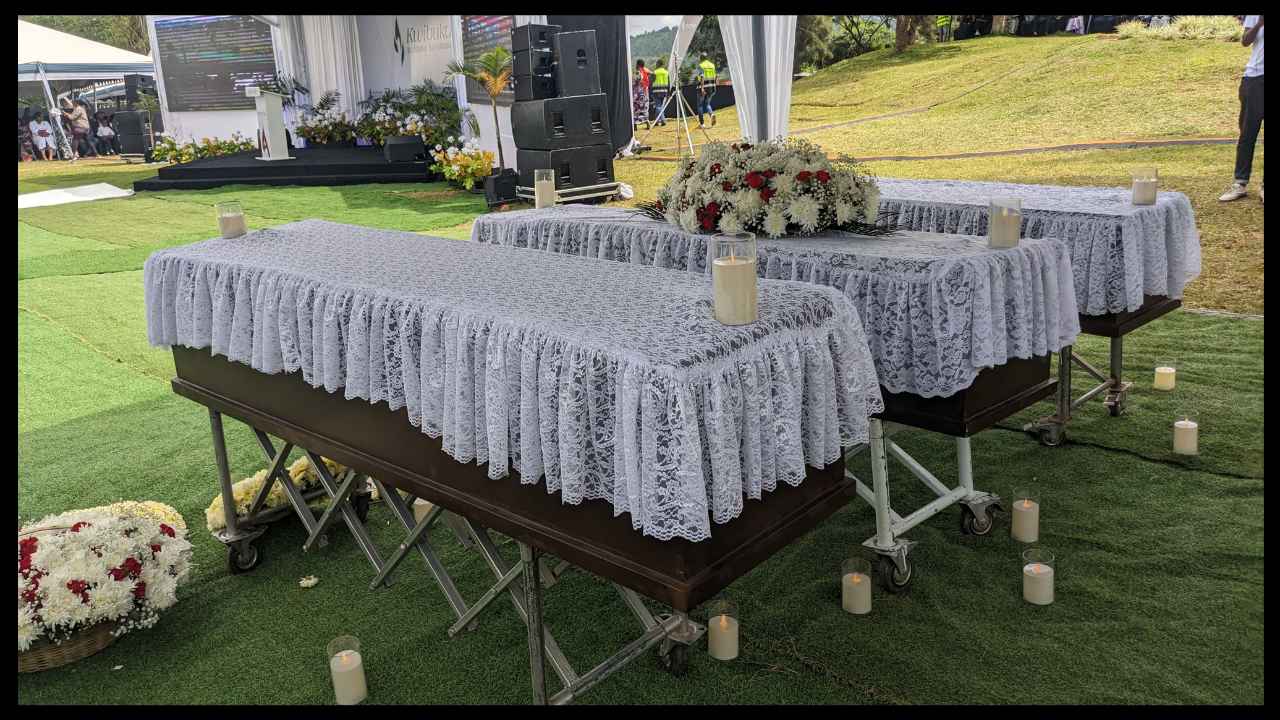
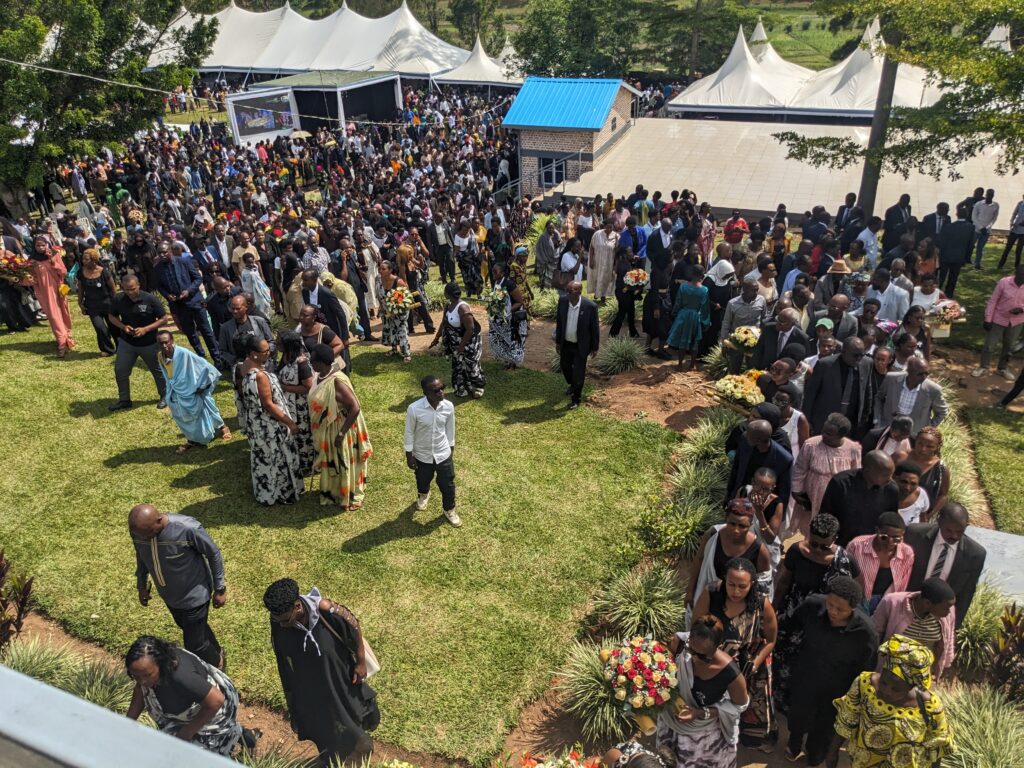
On Sunday, May 17, 2026, during the 32nd commemoration of the 1994 Genocide against the Tutsi, 30 bodies of genocide victims were laid to rest at the Kamonyi Genocide Memorial Site, located in Kibuza, Gacurabwenge Sector, Kamonyi District.
The commemoration was attended by various leaders, genocide survivors, families who lost loved ones, and local residents. Participants reflected on the history of the Genocide against the Tutsi and reaffirmed their commitment to fighting genocide ideology.
In testimony shared during the ceremony, Aphrodice Ngomiraronka, a survivor of the Genocide against the Tutsi, said he was 20 years old when the genocide began while living in Mpushi Cell, Musambira Sector. He recounted the history of discrimination and persecution that affected him and his family even before he was born.
He said: “My testimony begins with the persecution and discrimination based on ethnicity when I was still in my mother’s womb. In 1973, during the ethnic violence known as Muyaga, my mother fled to a priest’s residence at Cyeza Parish. While climbing over the fence, she fell while pregnant with me, causing complications. The priests rushed her to Kabgayi Hospital, and although the labor pains eventually subsided while she was still hospitalized, she later recovered and returned home.”
Ngomiraronka thanked the RPA-Inkotanyi forces for stopping the genocide and saving Tutsi lives.
He said: “Let me once again thank the Inkotanyi forces and thank His Excellency the President of the Republic, who stopped the killings against us and allowed us to live again. Inkotanyi is life.”
Speaking on behalf of families who buried their loved ones, Fabien Ndayambaje said that although genocide remembrance is a painful period, it is also a moment to honor the victims.
He said: “Today, we would not be able to stand here with hope for tomorrow were it not for extraordinary bravery.”
He added that the tragic history was defeated when the Inkotanyi stopped the Genocide against the Tutsi, allowing Rwandans to now live together in peace, unity, and reconciliation.
The Vice President of Ibuka at the national level, Christine Muhongayire, offered condolences to the families who buried their loved ones and comforted survivors whose relatives rest at the memorial.
She said: “Let me tell you, those we are burying today, together with all those resting in this memorial, that we love them. That is why we have gathered here, bringing them flowers and telling them that we will never forget them. May this give us strength to continue striving together to ensure genocide never happens again.”
The Minister of National Unity and Civic Engagement, Dr. Jean Damascène Bizimana, who was the guest of honor, said that the Genocide against the Tutsi resulted from hatred planted over many years through bad politics and poor leadership at the time.
He cited Jean-Paul Akayesu, former Leader of Taba Commune, which was once part of what later became Kamonyi District, as an example of a key perpetrator of the genocide.
He said: “He built a terrible legacy that will forever be studied worldwide as the first person ever convicted of genocide since the international Genocide Convention was adopted in 1948. He was the first African convicted of genocide. That is the legacy he will leave forever.”
Dr. Bizimana also noted that after the genocide, Rwanda chose the path of unity, reconciliation and forgiveness. Some perpetrators remained in the country, were tried through Gacaca courts and now live alongside their families in a nation committed to rebuilding its people.
He warned those who continue to cling to divisive and genocidal ideology that it will never bring them peace and urged them to abandon the hatred inherited from some parents and grandparents.
Dr. Bizimana stressed that explaining the history of the genocide is essential so that Rwandans and the world understand its origins and work to ensure it never happens again.
He said: “This moment of discussion is a time to explain history. Explaining it is painful, but necessary. It brings sorrow, but it must be understood because the Genocide against the Tutsi was a planned policy. That harmful policy must be explained so citizens understand where it came from and so it helps us prevent it.”
He further emphasized Rwanda’s post-genocide choice to build lasting peace and national unity.
He said: “Rwanda will never again be divided by bloodshed. Rwanda will remain a nation of peace for all of us. That is our choice, and it is the path that will sustain Rwanda forever. It is also the choice made by His Excellency the President of the Republic and the RPF-Inkotanyi from the beginning of the liberation struggle. Let us remember while striving to protect our shared nation.”
The Kamonyi Genocide Memorial Site previously held 47,933 bodies of victims of the Genocide against the Tutsi. The 30 bodies buried during this ceremony, five were newly discovered while 25 were relocated from other burial sites. The memorial now holds a total of 47,963 bodies.
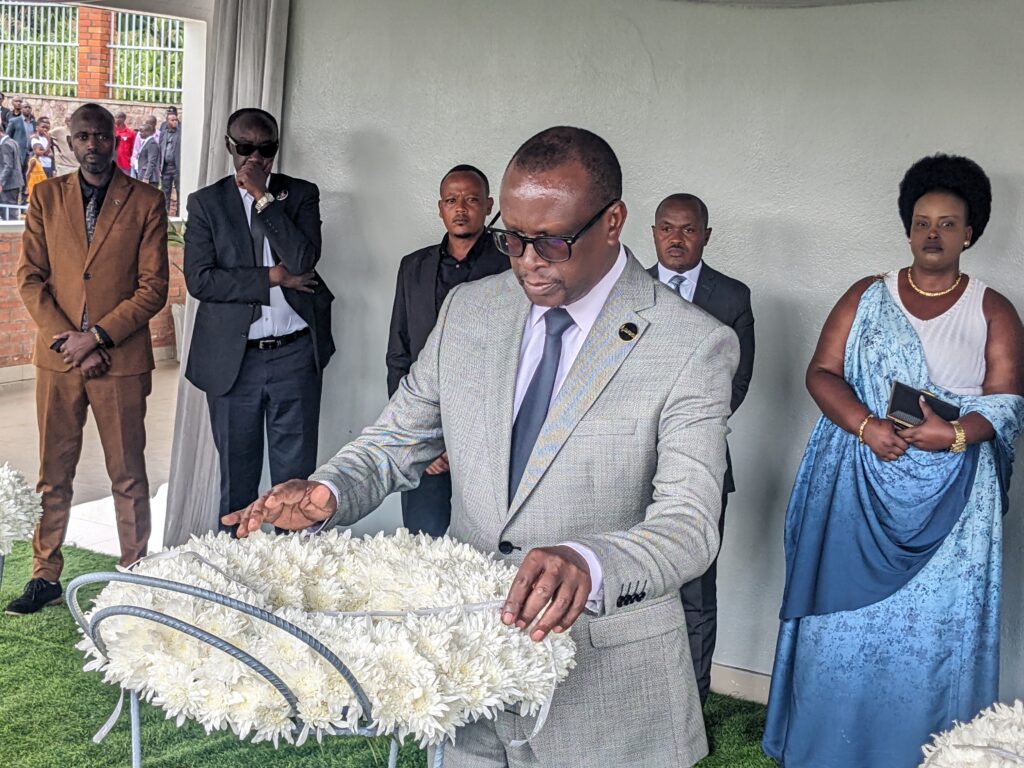 Minister Jean Damascene Bizimana pays tribute to the innocent victims of the 1994 Genocide against the Tutsi laid to rest at Kamonyi Genocide Memorial
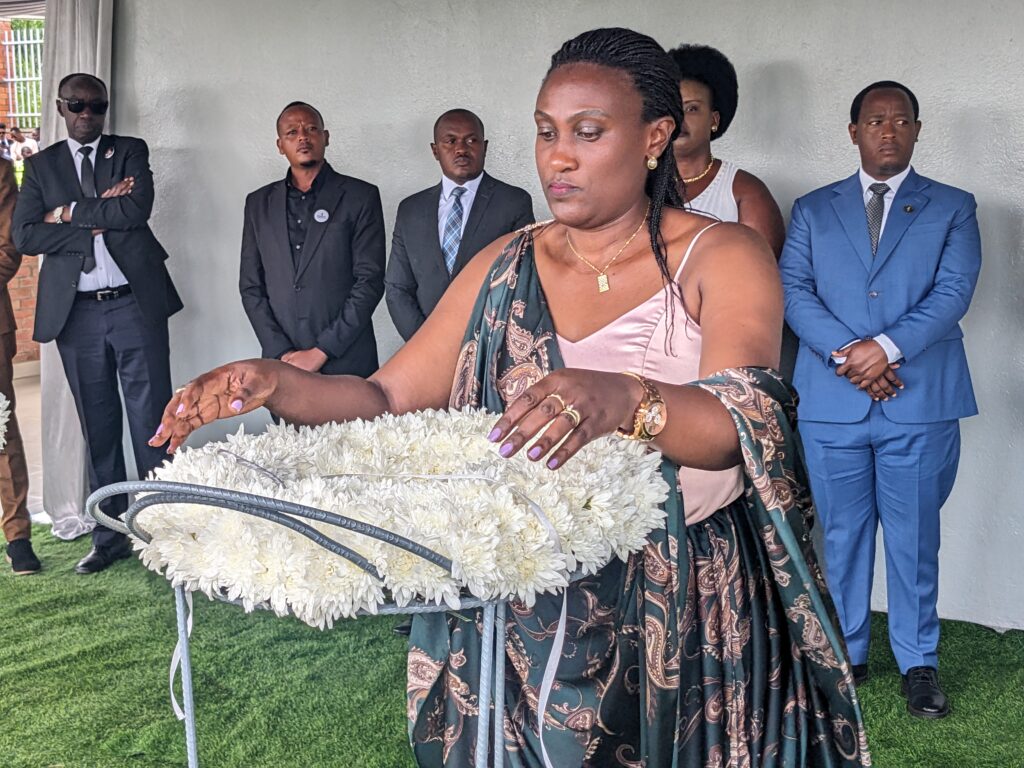 Alice Kayitesi, The Governor of the Southern Province honors and remembers victims of the Genocide against the Tutsi during the commemoration ceremony in Kamonyi
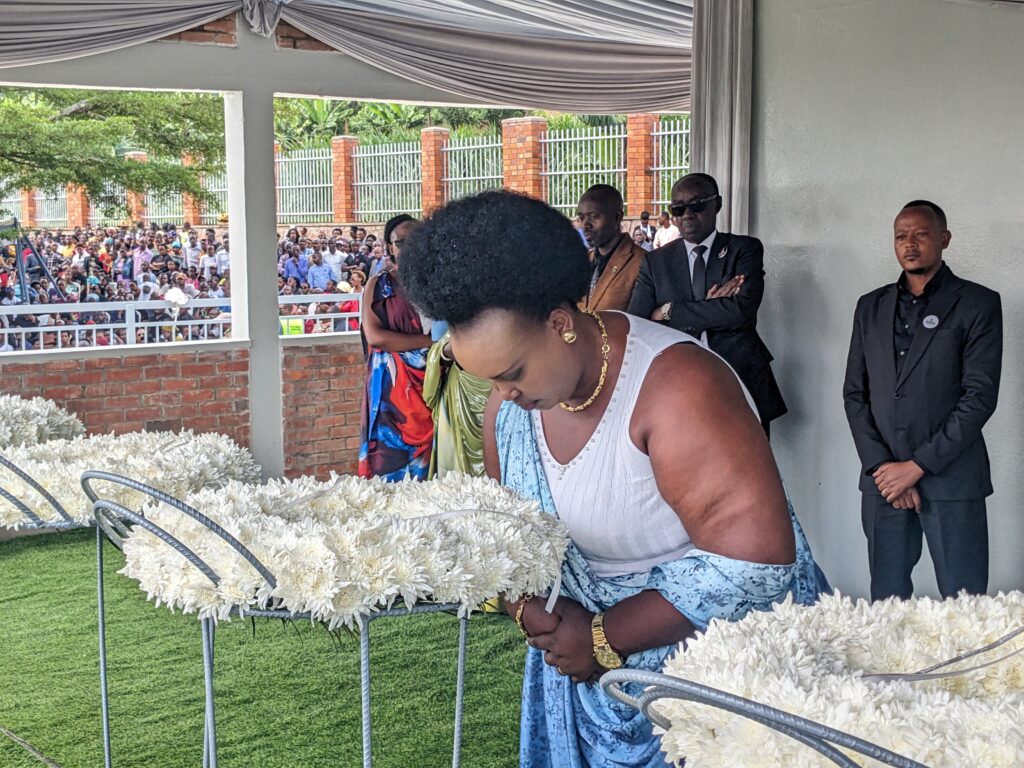 Christine Muhongayire, the Vice President of Ibuka joins families and leaders in paying respects to genocide victims at Kamonyi Memorial Site
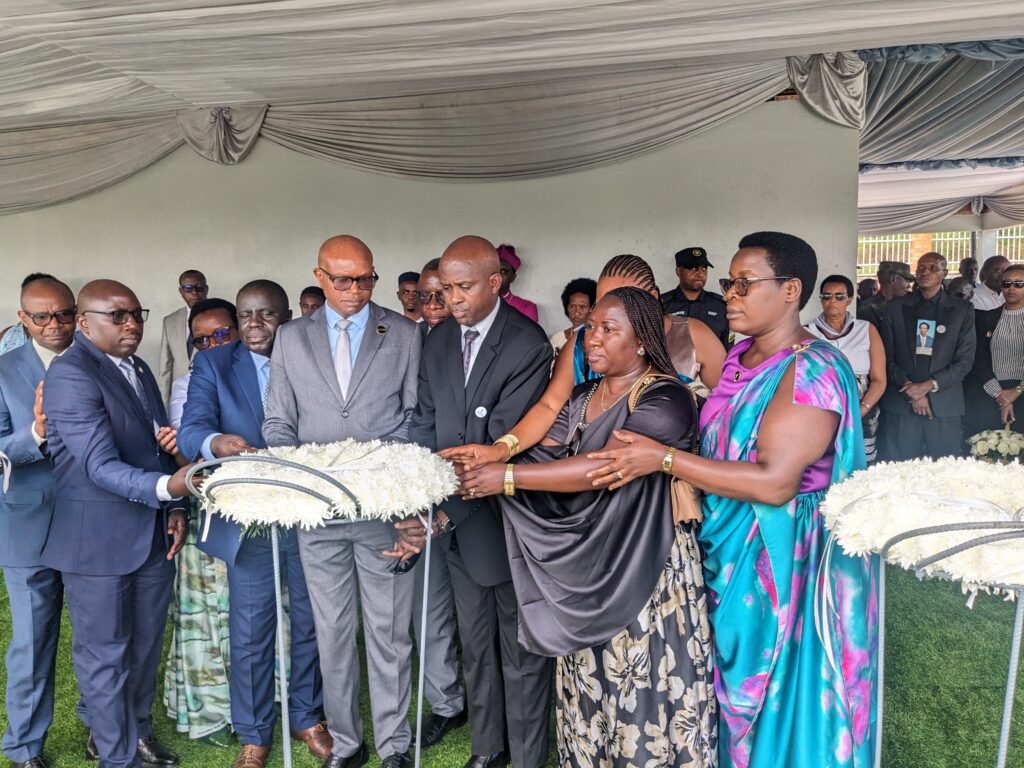 Members of Parliament pay tribute to the victims of the Genocide against the Tutsi during Kwibuka32 in Kamonyi District.
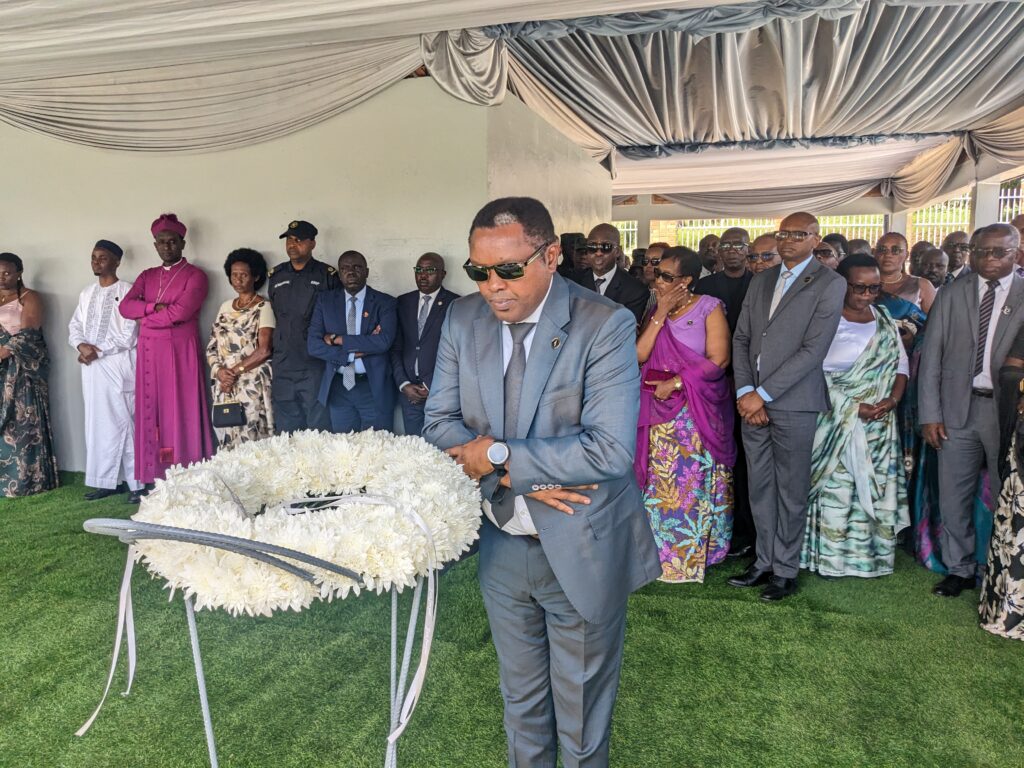 President of the Kamonyi District Council honors victims and supports families during the commemoration ceremony.
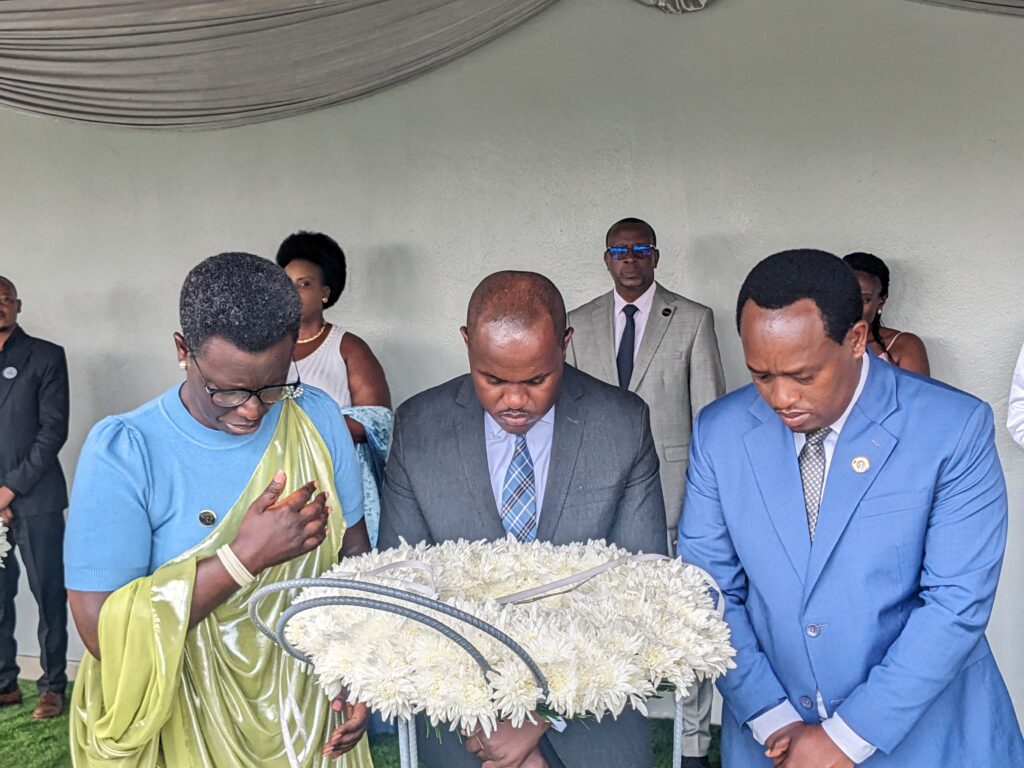 Dr Sylvere Nahayo, Mayor of Kamonyi District, Jacqueline Kayitare the Mayor of Muhanga District and District Executive Administrator of Nyarugenge Ingangare Alexis join residents in remembering and paying respect to victims of the 1994 Genocide against the Tutsi
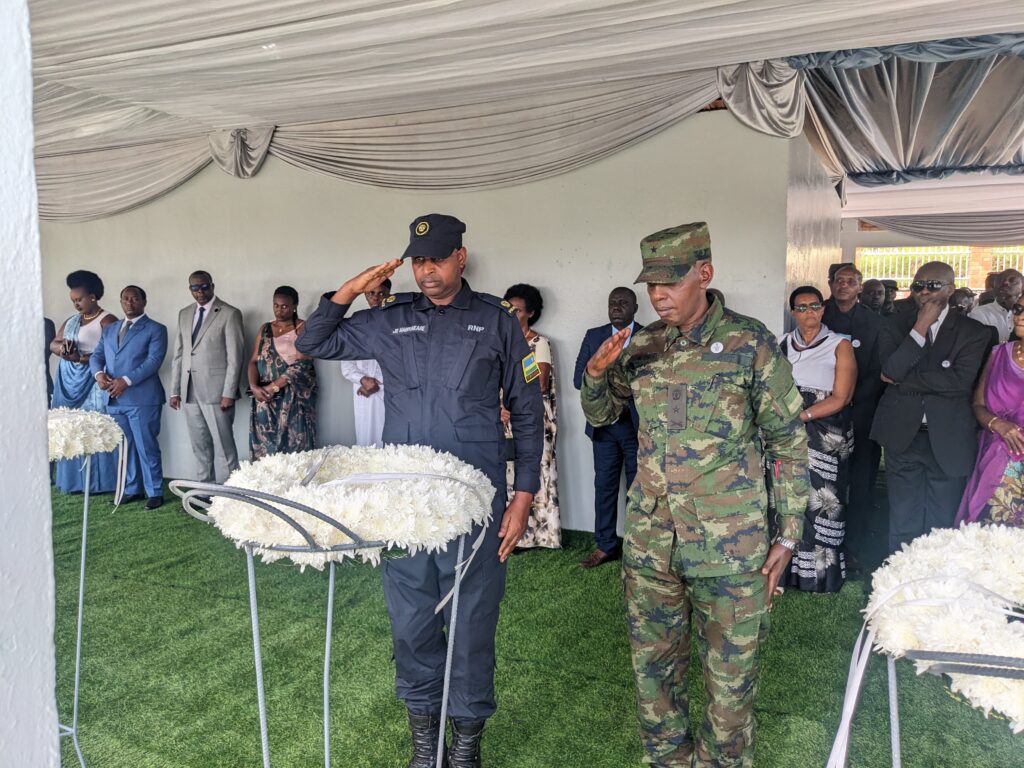 Security forces join the residents in honoring victims of the 1994 Genocide against the Tutsi during Kwibuka32 commemoration in Kamonyi