
 RUSAGARA MUVUNANKIKO Valens
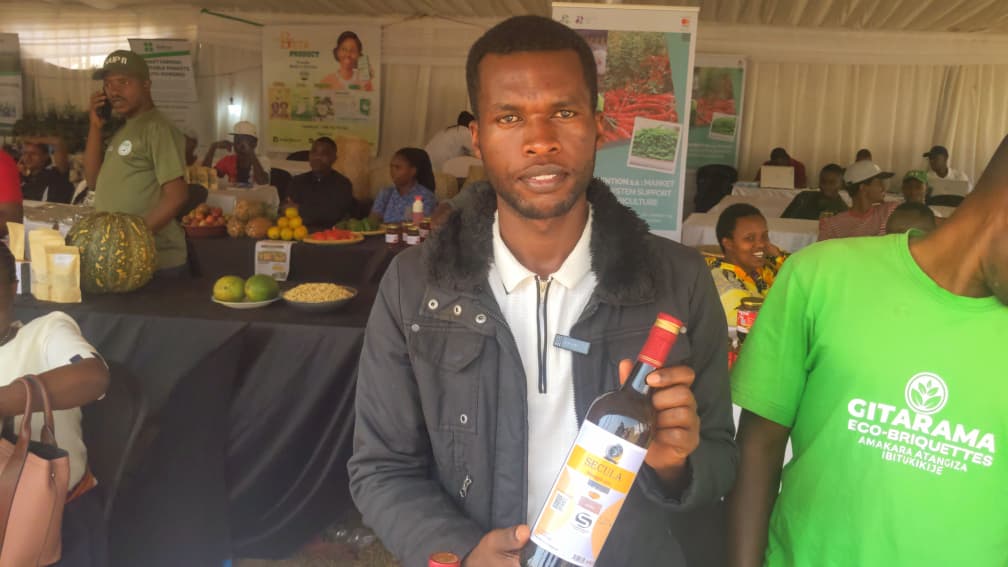
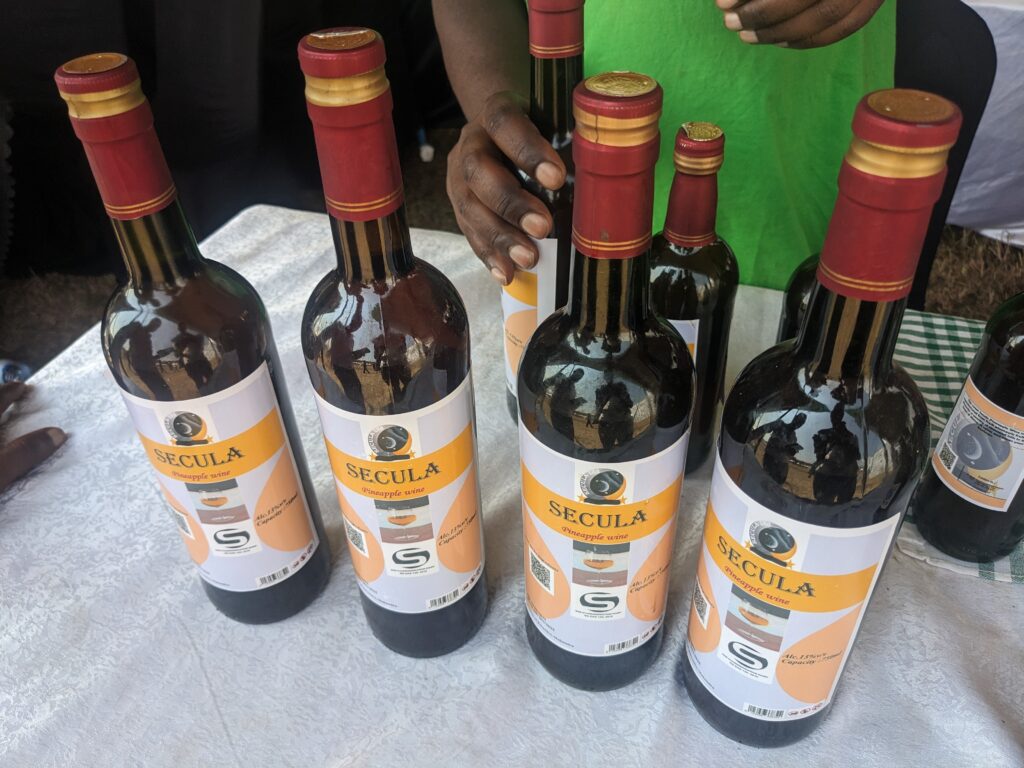
A youth-led agribusiness company, SECULA Ltd, is helping reduce post-harvest losses while creating employment by processing pineapples into wine and juice in Mukamira Sector, Nyabihu District, Western Province. Established in 2023, the company focuses on adding value to agricultural produce and supporting local farmers through sustainable agribusiness.
Speaking during an interview, Nshimiyimana Joseph, the company’s Sales and Marketing Officer, said the idea was born after realizing that many pineapples were going to waste because they could not all be consumed while fresh.
“We noticed that pineapples were produced in large quantities, yet many of them spoiled before reaching consumers. That inspired us to start processing them into value-added products. We extract the juice and ferment it for about three months to produce pineapple wine. For people who do not consume alcoholic beverages, we also produce fresh pineapple juice. This helps farmers avoid post-harvest losses while enabling both them and our company to earn income,” he said.
Joseph explained that SECULA Ltd currently purchases pineapples from farmers in Rutsiro and Gakenke districts. According to him, the company offers farmers a reliable market by buying an average-sized pineapple, weighing around 500 grams, at RWF 500.
“In many cases, when pineapples are harvested in large quantities, prices drop and farmers are forced to sell at very low prices. We help stabilize the market by buying directly from them at a fair price,” he said.
Since its establishment, the company has also contributed to job creation. Joseph said SECULA Ltd currently employs 11 permanent staff members while also providing temporary employment opportunities for casual workers, including cleaners and people involved in product distribution.
“Our daily operations have enabled us to create jobs for young people and other community members. Besides our permanent employees, we regularly hire additional workers depending on production and distribution needs,” he noted.
Regarding production capacity, Joseph said the company currently produces about 100 liters of pineapple products every month. He explained that production depends on market demand and the availability of raw materials, as the fermentation process requires careful planning and cannot be carried out continuously.
“Our products are mainly available at our factory in Nyabihu, but customers can also find them at Kimisagara Youth Center and Kimironko in Kigali. We are now working on expanding distribution to more markets across the country,” he added.
Joseph said customer demand has continued to increase, especially after the company showcased its products at the AgriShow, where many visitors appreciated the quality of the pineapple wine and juice.
“Because our products meet quality standards and have the required certifications, customers continue to place orders. Our next priority is to establish more retail outlets so that consumers can easily access our products,” he said.
He attributed the company’s success to the educational background of its founders and staff. According to him, the company’s owner studied Food Science, while he himself studied Agriculture, enabling them to manage every stage of production professionally from farming to the final bottled product.
“We understand the entire value chain because of our academic background. Our knowledge allows us to produce high-quality beverages while maintaining food safety standards,” he explained.
Beyond creating employment and supporting farmers, Joseph said the company also contributes to Rwanda’s economic development by paying taxes, business license fees, and issuing Electronic Billing Machine (EBM) invoices for every sale.
However, he pointed out that one of the company’s biggest challenges is accessing quality packaging materials. He noted that glass bottles are imported from abroad, making production more expensive.
“Packaging remains a major challenge because we have to import bottles. If Rwanda had local industries producing high-quality packaging materials, beverage manufacturers like us would significantly reduce production costs,” he said.
Joseph also discussed the challenges faced by young entrepreneurs in Rwanda. He identified limited access to startup capital and inadequate business knowledge as the biggest obstacles preventing many young people from launching successful enterprises.
“The first challenge is access to capital. Many young people have good ideas but lack the financial resources to start. Others begin businesses without fully understanding market requirements or the legal procedures needed to operate successfully,” he explained.
To address youth unemployment, Joseph encouraged young people to work together instead of trying to establish businesses individually.
“My advice to young people is to collaborate and combine their resources. Building businesses as teams makes it easier to share responsibilities, raise capital, find customers, and attract investors. Teamwork increases the chances of long-term business success,” he said.
He also called on Rwandans to prioritize buying locally made products, saying that supporting domestic industries strengthens the national economy, creates more jobs, and encourages innovation among local entrepreneurs.


 Ivan Damascene Iradukunda