
 Daniel Nyionkuru
In an effort to tackle malnutrition and address the effects of climate change, the Government of Rwanda, in partnership with UNICEF Rwanda, One Acre Fund, and various other organizations, has launched a program to plant fruit trees in more than 4,000 schools and around 200 early childhood centers across the country.
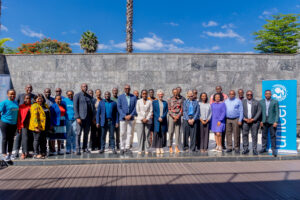
The program was officially launched on Monday, May 18, 2026, at the Radisson Blu Hotel in Kigali, where various leaders explained that the initiative aims to build a better future for children by giving them the opportunity to develop a culture of environmental care and healthy eating.
The theme of the initiative is “Our Trees, Our Future.” Leaders noted that fruit trees planted in schools will help children access nutritious food, raise awareness about environmental protection, and support the country’s ongoing efforts to expand its forest cover.
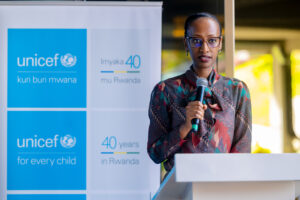
Lieke van de Wiel, UNICEF’s Representative in Rwanda, said the program comes as UNICEF marks 40 years of working with Rwanda on child welfare. She stated: “This is another step forward in our continued commitment to caring for children and preparing them for a brighter future.”
She explained that the UNICEF-Rwanda partnership began with work in child protection, nutrition, and education, but that today’s global challenges including climate change require new and long-term solutions. She added: “The world is changing. Artificial intelligence is here, climate change is here, and biodiversity conservation also matters greatly.”
She noted that schools are an ideal platform for reaching large numbers of children, saying that nearly every child attending primary school in Rwanda can be reached through this program: “When you reach every school and there are close to 5,000 primary schools in Rwanda you are reaching those children too.”
Each school will receive at least 40 fruit trees, and children will be involved in the entire process from planting to ongoing care, so they grow up understanding the importance of protecting the environment. She added: “Ten years from now, they will remember it even twenty years from now, they will say, ‘I planted this tree when I was a child.'”
Belinda Bwiza, Country Director of One Acre Fund Rwanda an organization that helps smallholder farmers access seeds, fertilizer, and training to increase their harvests, while also supporting tree planting and environmental protection said the program will play a major role in building communities that can withstand the effects of climate change. She stated: “This is not just about planting trees. It is about building lasting resilience within Rwandan society.”
She noted that One Acre Fund works with more than two million farmers in Rwanda, many of whom continue to face challenges such as soil degradation, changing weather patterns, and malnutrition.
She also said that children will grow up with a deep understanding of the environment and nutrition because they will plant and care for fruit trees right at their own schools: “When a child plants a fruit tree and takes care of it, they learn responsibility, environmental stewardship, and the value of good nutrition.”
She added that investing in this program is also about preparing tomorrow’s leaders, researchers, teachers, and farmers, saying: “If we want Rwanda to be resilient in the face of climate change in the future, we must invest in today’s youth.”
One Acre Fund has already distributed more than 145 million trees across Rwanda, and its tree nursery operations have created jobs and business opportunities for thousands of community members, particularly women and young people.
Minister of Environment, Dr. Bernadette Arakwiye, said this fruit tree planting initiative in schools is part of the country’s broader strategy to continue protecting the environment and expanding forest cover. She stated: “This launch is a sign of our collective commitment to protecting the environment and building a future for our children.”
She highlighted that fruit trees play a significant role in helping communities access nutritious food, protecting soil from erosion, and reducing greenhouse gas emissions, noting that every tree planted brings meaningful benefits to the community.
The Minister also said that Rwanda’s second National Strategy for Transformation (NST2) targets the planting of 300 million seedlings, and that this program will help the country continue working toward its goals of increasing forest coverage.
Currently, government figures show that Rwanda’s forest cover has reached 30.4%, surpassing the country’s own target of 30%.
Dr. Arakwiye emphasized that this is not a short-term project, but a long-term investment in children’s wellbeing and environmental protection — one that requires commitment from all sectors to ensure that the trees planted are properly maintained and allowed to grow well. She said: “This program is an investment focused on three key pillars. We must commit to long-term care, consistent monitoring, and making sure communities feel a sense of ownership.”
The actual tree planting across the country is scheduled to begin between September and October 2026, when the rainy season starts, to ensure the trees are planted under the right conditions for healthy growth and lasting results.



 Daniel Ngendahimana
 Muhire Obed