
 RUSAGARA MUVUNANKIKO Valens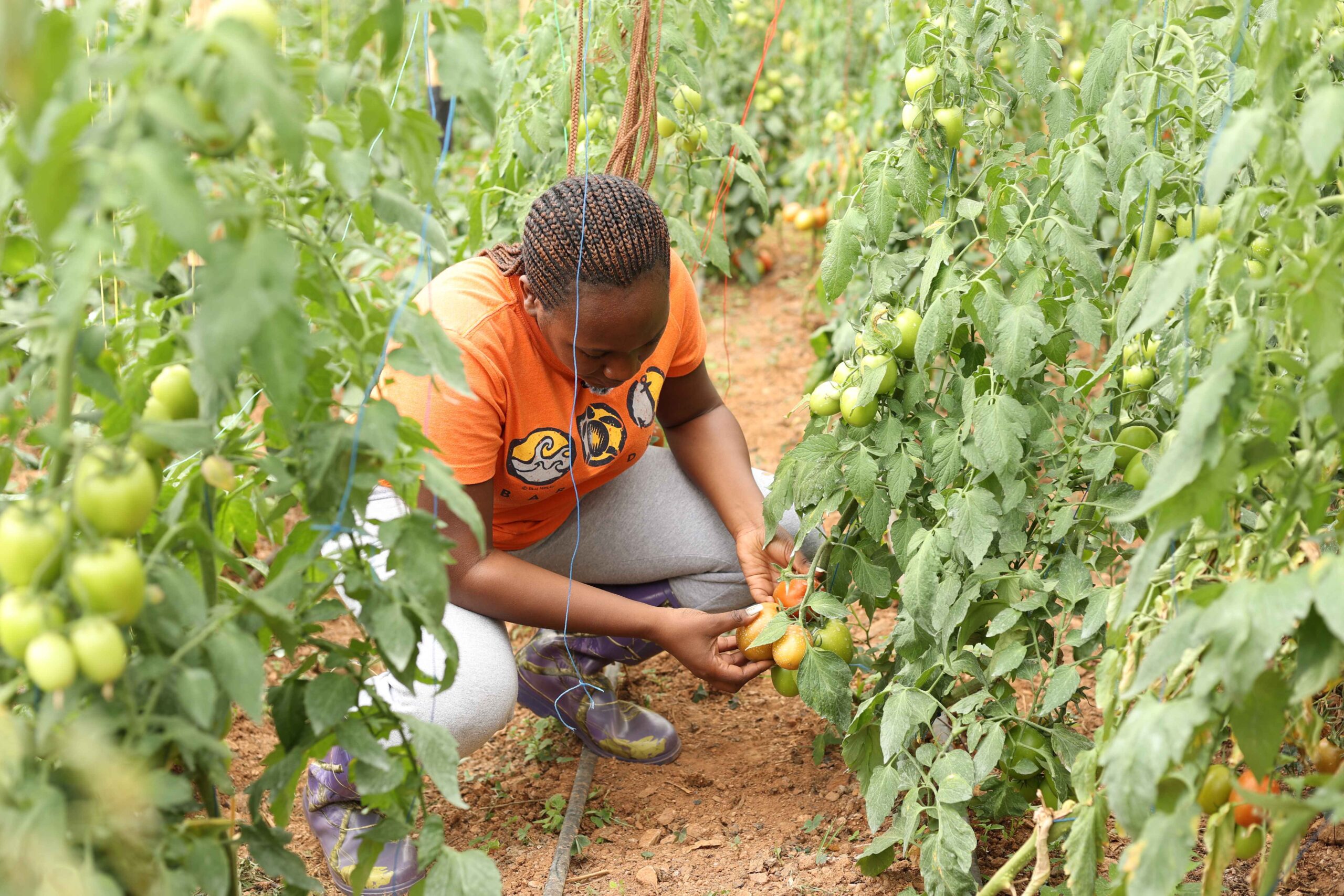
Growing up in Shyala Cell, in the Muganza Sector of Rusizi District in Rwanda’s Western Province, Bisenge Mico Mariette watched rice grow in the fields around her home. She decided early on that farming was not for her.
“It was not appealing, not aesthetic,” she says of agriculture. “I have never imagined myself as an agriculture person.” Instead, she pictured a different future as a doctor, an engineer or a lawyer.
That decision followed her into high school, where she chose to study mathematics, physics and chemistry. It was, she admits now, a deliberate move to steer clear of farming for good.
She leans on a line from geometry class to explain the plan: “In mathematics you used to say that parallel lines never meet or they meet at infinity. So that was my plan to never cross paths with agriculture.”
Mariette carried that plan to university, where she enrolled in energy engineering at the College of Science and Technology, University of Rwanda. But even before she reached her second year, she had already discovered a taste for building things trying her hand at fashion, construction and recycling ventures.
It was while searching for her next opportunity that agriculture found her, ironically, through technology. She began developing an agri-tech tool designed to monitor and control environmental conditions inside greenhouses and open fields a system built for precision farming and climate resilience.
There was just one problem. To build something farmers would actually use, she realized she needed to become one.
“I can’t do that without being a farmer,” she says, “because I need to experience what farmers are experiencing every day. I need to learn what they’re learning. I need to face all the issues they’re facing. That’s the true way of being an entrepreneur.”
Owning a decision, she wasn’t yet proud of
The shift into farming did not come with instant confidence. For a long time, Mariette found herself justifying her choice to nearly everyone who asked.
“I wasn’t proud of it,” she admits. “I felt like I always owed explanations to every person who was asking me, why are you into agriculture? I had to explain a long paragraph, as if they’re my client and I’m convincing them to buy from me yet I had the insecurity. I wasn’t convinced what I was doing.”
What kept her moving forward wasn’t certainty, but trust. “That journey, that path was not clear,” she says, “but I had trust in it that it’s going to happen one day.”
Starting with nothing
Belief alone doesn’t pay for seedlings, irrigation pipes, or greenhouse structures. Mariette’s biggest early obstacle was money and she had almost none of it.
At the time, her only income was a 40,000 Rwandan franc monthly allowance from the University of Rwanda and even that fell far short of what she needed. She describes those early days simply: she had nothing to fall back on and nowhere else to turn.
The break came through Imali Agribusiness, a program under the Imbuto Foundation. She applied and secured 10 million Rwandan francs in start-up capital enough to finally put her business idea into motion.
But even that sum, which sounded substantial to someone used to living on a student allowance, proved tight against the real costs of running a farm. She later turned to additional partners, including BDF through CDAT, to secure further financing.
Capital was only half the challenge. Mariette had no background in agriculture, and she knew it. What she needed next was knowledge training, market exposure, and connections to the people already working in the industry.
She credits Rwanda Youth in Agribusiness Forum and its partners AGRA, IFAD, and the Mastercard Foundation with opening those doors. She singles out one experience in particular: the agriculture trade show at Mulindi, where her partners covered her stand, transport, food, and accommodation so she could attend and meet buyers face-to-face.
“That was a very, very big help,” she says. “Even though I had the capital, which wasn’t enough, I had no skills. Who would buy my produce? So I tried my best, and they did the rest.”
Smart greenhouse takes root
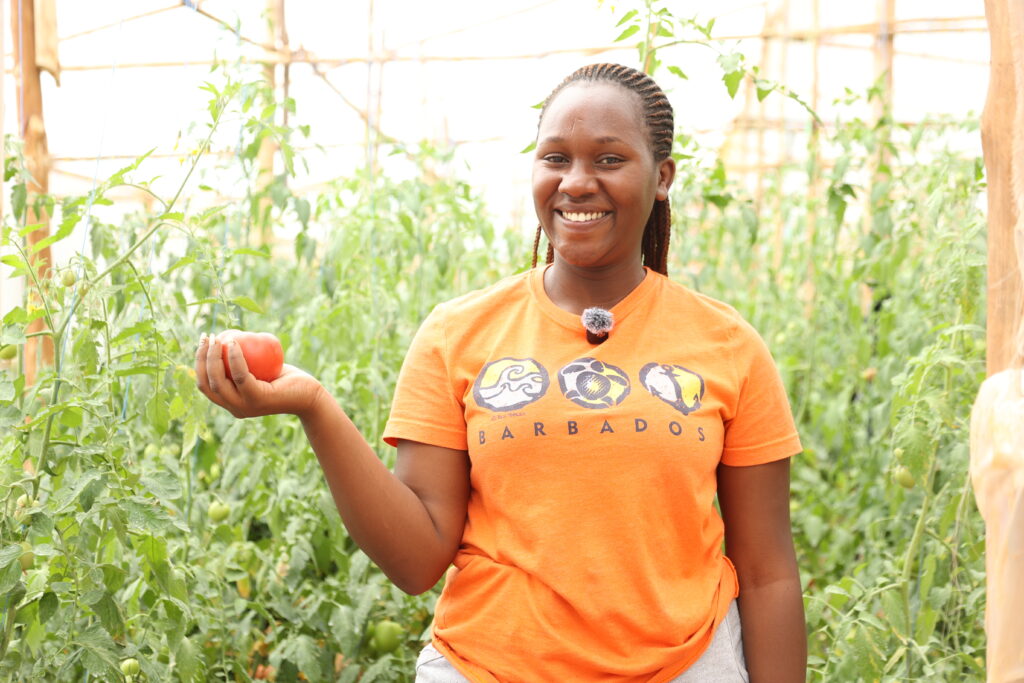
Out of that mix of capital, training, and sheer persistence, Mariette built Smart Greenhouse a precision agriculture company that uses technology to monitor and control the conditions crops need to thrive.
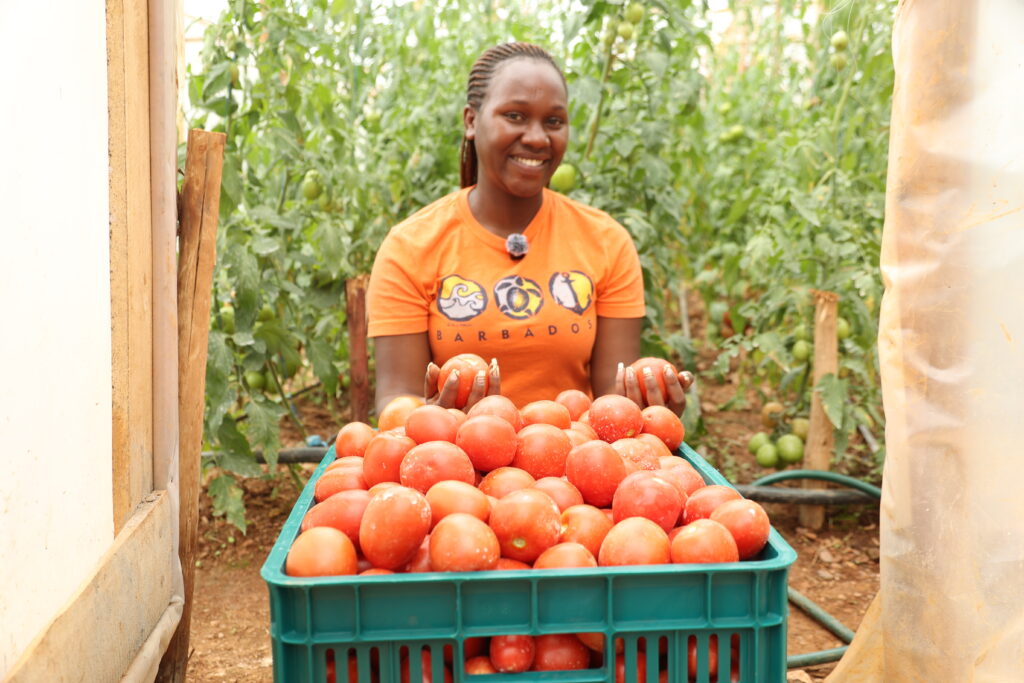
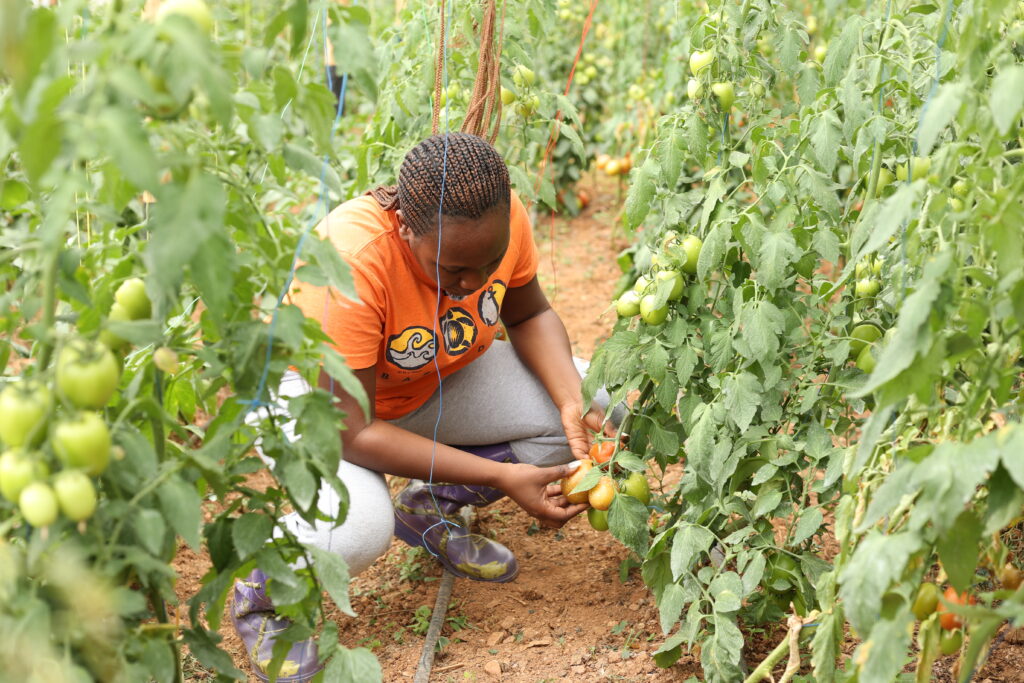
The company currently runs greenhouse farms in Rwamagana District and two other locations, growing tomatoes, sweet peppers, habaneros and strawberries for both local and international markets. It employs six permanent staff and 30 seasonal workers, with plans to grow that number further.
Mariette frames her work within a national goal: Rwanda’s 2030 target to raise agricultural production by 25 percent. “This is contributing to the production,” she says. “This is creating jobs in the youth. And also this is contributing to our country’s GDP, as we are contributing to the exports.”
Talking openly about the money
Mariette was raised, like many, to keep quiet about earnings. “We were taught that we don’t say about money,” she explains. “We should say less than what we earn.” But she chose to break that habit for the sake of other young people weighing whether to enter the industry.
Income from the greenhouses varies by crop and season tomatoes take about four months to a season, sweet peppers six to eight months, and habaneros and strawberries closer to a full year. Averaged across all three greenhouses, gross profit after taxes and salaries ranges between roughly 28 and 30 million Rwandan francs.
“I’ll be honest this time,” she says, “to inspire other people who want to join this industry. They think there are no opportunities, yet there are.”
A Message to young people considering agriculture
Mariette is direct about the barriers she faced, because she knows other young people are facing the same ones today: raising capital, reaching real markets and building skills in a field they may know nothing about.
“Most people want to do agriculture and they say, ‘I have no skills about agriculture,’ yet they don’t know where to start,” she says. “That remains a barrier to most of them.”
Her response to that hesitation is direct: “Agriculture needs you very much. We need to eat every day. We are not going to stop eating as long as we are breathing.” As the population grows and farmland shrinks, she argues, the opportunities in agriculture will only expand and young people, with their creativity and willingness to innovate, are exactly who the sector needs.
“This industry needs you more than any industry will ever need you,” she says. “Do you think agriculture needs you?”
If there’s one issue Mariette wants partners and policymakers to address, it’s market access. Middlemen, she says, buy produce from farmers like her at low prices and resell it in bigger markets at a significant markup leaving the people who took on all the risk and did all the work with a smaller share of the profit.
“We end up having less than what you would expect to have,” she says. Her ask to potential partners is simple: help connect farmers directly to better markets.
Looking Five Years Ahead
Mariette’s vision for her own future is tied entirely to the greenhouses she’s built. She believes the future of farming lies in growing more on less land and she intends to be at the center of that shift.
“In five years to come, I will be a big greenhouse farmer, because the future is in the greenhouses to grow crops on a very small field, but growing much,” she says. “So my name, Mariette, will be a synonym to a greenhouse farmer. You will not be able to separate them. Saying Mariette, you’ll be saying a greenhouse farmer. Saying a greenhouse farmer, you’ll be mentioning Mariette at the same time.”
The girl who once chose parallel lines to avoid agriculture has spent the years since finding her way back to it this time, on her own terms.