

 Muhire Obed
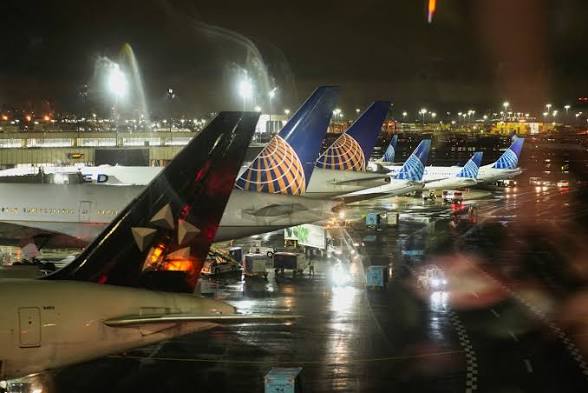
The United States is facing renewed scrutiny over the security of its digital infrastructure following a series of cyberattacks, government data breaches and widespread technology disruptions affecting major institutions, businesses and critical public services.
From federal government networks and financial institutions to aviation systems and major technology companies, recent incidents have raised serious questions about America’s ability to protect sensitive information and maintain the reliability of its increasingly interconnected digital infrastructure.
Although authorities have dismissed suggestions that the latest wave of technology outages represents a coordinated attack against the country, several independently confirmed cyber incidents throughout 2026 demonstrate that American institutions remain attractive targets for sophisticated hacking operations.
One of the significant cybersecurity developments occurred in July, when the Department of Homeland Security (DHS) confirmed that it was investigating a breach involving an information-sharing network used by government agencies and their partners.
In a statement, DHS acknowledged a “recent cyber incident” involving an unclassified legacy information-sharing environment. The department did not immediately disclose the extent of the breach or identify those responsible.
The incident raised concerns because the affected network reportedly supported information exchange between federal agencies, local authorities and international law enforcement partners.
(Alex Brandon/AP)
Another major development emerged in August, when the U.S. Department of Justice announced that it had disrupted a Chinese-linked hacking operation targeting sensitive American institutions.
According to the investigation, the operation involved attempts to penetrate networks associated with the Justice Department, NASA, the Federal Reserve and the U.S. Senate, among other institutions.
Authorities seized domains connected to two hacking platforms, identified as QScan and QTRouter, which investigators said had been used in the campaign. The operation reportedly involved activities dating back to at least 2018.
China has rejected allegations of wrongdoing, with its embassy in Washington stating that the Chinese government opposes cyberattacks and accusing the United States of using cybersecurity allegations to discredit China.
The recent incidents have intensified pressure on American security agencies to explain the vulnerabilities affecting government infrastructure.
However, Homeland Security Secretary Markwayne Mullin has cautioned against assuming that every major technology disruption is the result of hacking.
Following the nationwide aviation disruption on November 13, Mullin told reporters:
“We have seen zero evidence that this was a cyberattack or an SI attack.”
He described the situation as a national security concern, pointing to the outdated technology supporting America’s air traffic control infrastructure.
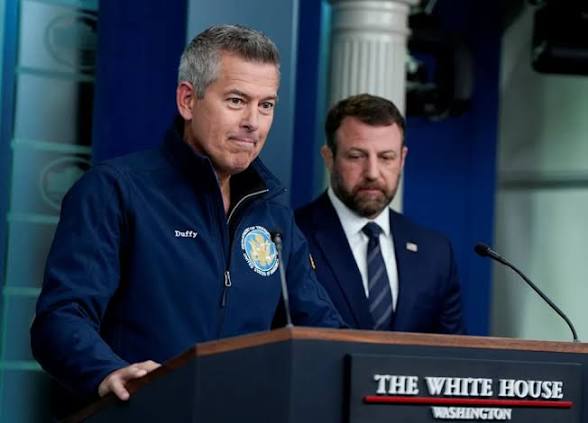
Transportation Secretary Sean Duffy also addressed the incident, explaining that telecommunications problems had affected radar and communication systems used by air traffic controllers.
According to Duffy, a nationwide ground stop was necessary to protect passengers while authorities investigated the disruption.
“We don’t believe this was cyber at all,” Duffy said when discussing the suspected cause of the aviation disruption.
He explained that preliminary findings pointed towards problems involving a contractor’s telecommunications equipment during the replacement of outdated copper connections with fibre-optic technology.
The disruption affected more than 3,500 aircraft, while more than 8,000 flight operations resumed after the airspace reopened.
Although the incident initially generated speculation about a possible cyberattack, officials said there was no indication that hackers were responsible.
President Donald Trump has also responded to questions about the growing number of technology failures affecting American institutions.
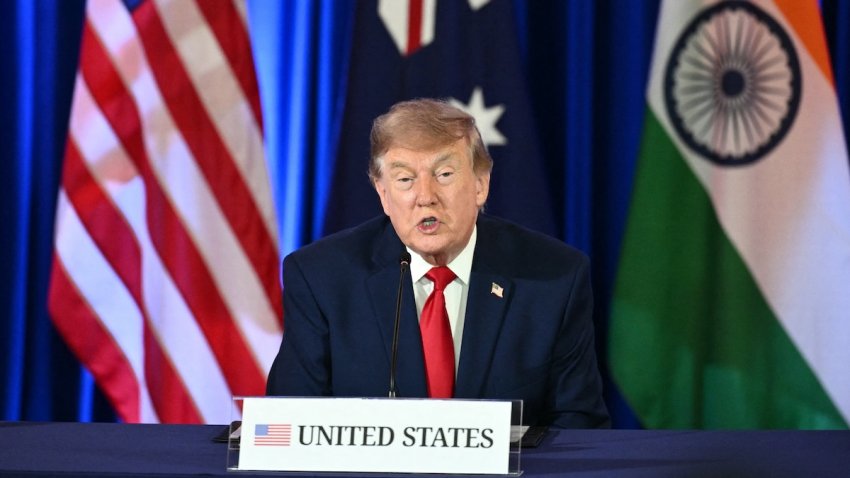
Speaking to reporters in Manila on November 17, Trump played down concerns about the incidents, which had affected businesses and government systems over several consecutive days.
“It’s like when you’re big and powerful, and you have all the money. Things like that happen. It’s fine,” Trump said.
His remarks came as technology disruptions affected Microsoft services, airline operations, banking systems, Apple services and an internal communications network used by the National Security Agency (NSA).
The White House administration has maintained that there is no verified evidence connecting these incidents to a coordinated cyberattack.
Director of National Intelligence Jay Clayton also rejected suggestions of a coordinated foreign operation, stating that the government had investigated the possibility and found no evidence supporting that conclusion.
Secretary of State Marco Rubio similarly reassured Americans, saying: “We are not under systemic attack.”
Nevertheless, the incidents have prompted questions from lawmakers and cybersecurity experts about the resilience of America’s digital infrastructure.
While officials have sought to distinguish technical failures from malicious cyber activity, other confirmed incidents demonstrate the growing sophistication and reach of cybercriminal operations.
In August, the U.S. government confirmed that a ransomware group had accessed a computer system belonging to the Bureau of Alcohol, Tobacco, Firearms and Explosives (ATF).
The affected system contained information relating to individuals targeted in investigations. Authorities said the system was quickly shut down after the breach was discovered, and an investigation was launched in coordination with the Department of Justice.
In another development reported on November 17, security researchers identified malicious code distributed through Optimizely, a third-party website experimentation platform.
The incident potentially exposed visitors to websites associated with approximately 178 organizations, including CNN, Zoom, Salesforce, Equifax, HSBC and IKEA.
The malicious scripts were designed to collect sensitive information, including payment-card details and browser data, while also attempting to exploit vulnerabilities affecting mobile devices.
Optimizely acknowledged that an unauthorized party had exploited a vulnerability in its platform and said it had removed the malicious scripts and introduced additional security measures.
Investigators have not established how many individuals were successfully compromised, highlighting the importance of distinguishing attempted attacks from confirmed data theft.
The incidents have renewed debate about the security of critical infrastructure, particularly as government agencies and private companies increasingly depend on interconnected digital systems.
Cybersecurity specialists warn that weaknesses in third-party software, outdated infrastructure and inadequate security practices can create opportunities for hackers to access sensitive information or disrupt essential services.
Artificial intelligence is also changing the cybersecurity landscape. While organizations increasingly use AI to identify vulnerabilities and strengthen their systems, malicious actors can also exploit advanced technologies to identify weaknesses and conduct attacks more efficiently.
The recent disruptions demonstrate that even institutions with substantial financial and technological resources can experience significant operational problems.
More importantly, the distinction between a technical failure and a deliberate cyberattack is essential. Incorrectly attributing every outage to hackers risks creating unnecessary public alarm, while failing to investigate genuine security breaches could expose sensitive government and personal information.
The United States faces an increasingly complex cybersecurity environment in which government agencies, private companies and critical infrastructure operators must continuously strengthen their digital defences.
Although the Trump administration has rejected claims that the latest technology outages represent a coordinated attack, confirmed breaches and hacking operations throughout 2026 demonstrate that the threat remains real.
As investigations continue, the central challenge for Washington will be ensuring that America’s digital infrastructure is sufficiently secure, modern and resilient to withstand increasingly sophisticated cyber threats.
Protecting government information, financial systems, transportation networks and ordinary citizens’ personal data will remain essential to maintaining public confidence and national security.