
 RUSAGARA MUVUNANKIKO Valens
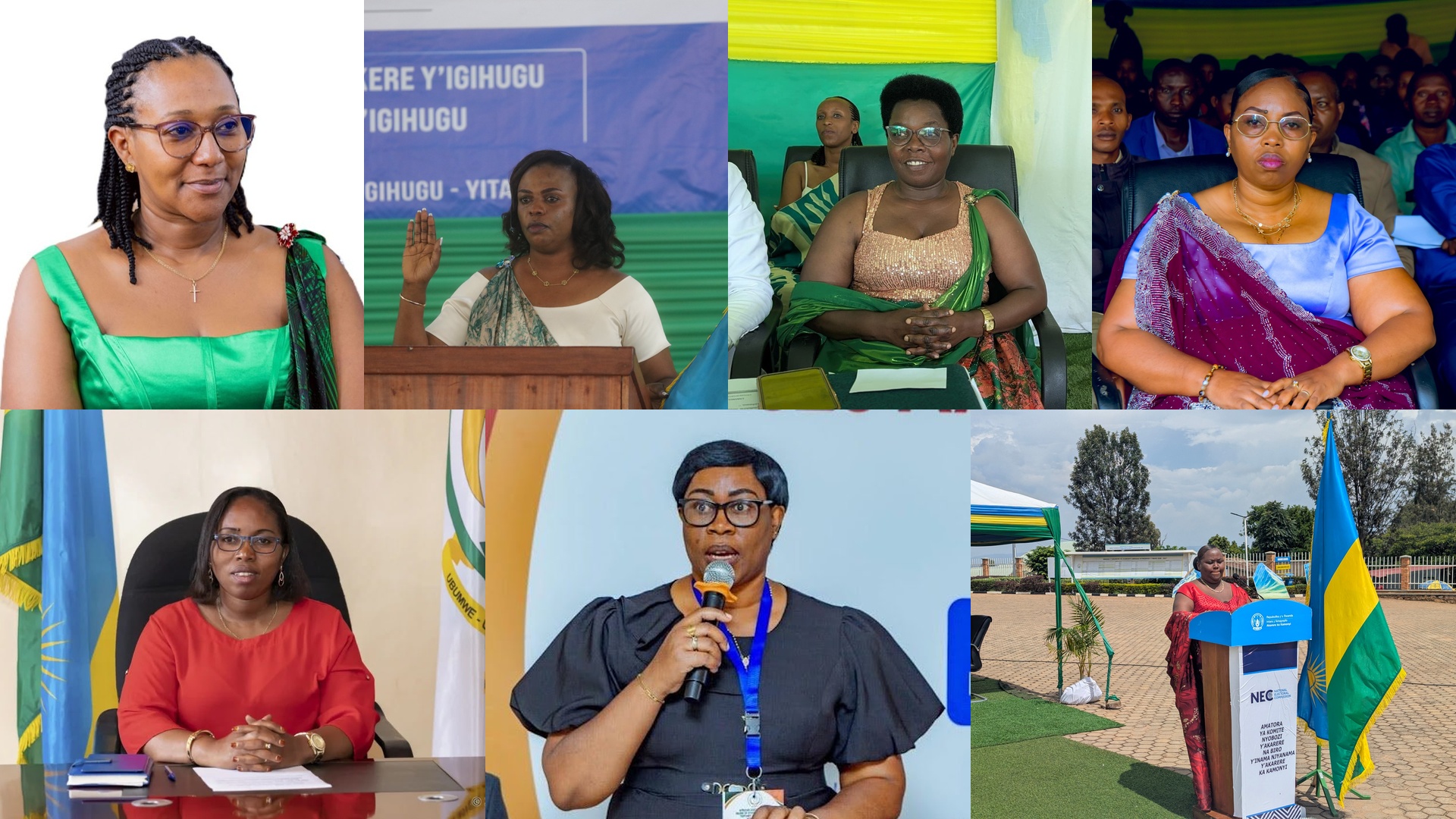
In 27 districts of Rwanda new district leaders elected following local government elections held across the country on Tuesday, November 24, 2026. The elections took place in 27 districts with legal personality, ushering in a new five-year leadership term that will run until 2031.
19 of the 27 district mayors are men, representing 70.37 per cent, while women account for eight positions, equivalent to 29.63 per cent.
The elections marked another stage in the country’s local government leadership selection process, following the election of members of District Councils. The newly elected leaders will be responsible for overseeing district administration and implementing local development programmes during the new term.
The eight women elected to lead districts are Berwa Marie Grace in Musanze, Niyongira Nathalie in Ngoma, Uwingabire Jacqueline in Nyabihu, Mukandayisenga Vestine in Gakenke, Murekatete Patricie in Kamonyi, Dr Musabwasoni Sandra in Rwamagana, Uwamahoro Chantal in Rulindo and Mukasonga Virginie in Ruhango.
The 19 male district leaders include Sindayiheba Phanuel in Rusizi, Sekanyange Jean Leonard in Gatsibo, Muzungu Gerald in Karongi, Milindwa Prosper in Rubavu, Niyibizi Ildephonse in Burera, Dr Bimenyimana Pierre Celestin in Nyanza, Mupenzi Narcisse in Nyamasheke, Niyibizi Ildephonse in Burera, Kakooza Henry in Nyagatare and Fred Hategekimana in Kayonza.
Others are Nshimiyimana Védaste in Huye, Niyoshuti Gerard in Muhanga, Gakumba Vincent in Rutsiro, Mutwara Gahiga Ezra in Bugesera, Hategekimana Vincent in Gicumbi, Habimana Thaddée in Nyamagabe, Ntihinyurwa Joseph in Gisagara, Rangira Bruno in Kirehe, Siboyintore Theodat in Nyaruguru and Bikorimana Jean Paul in Ngororero.
District mayors in Rwanda are not directly elected by residents through a general public vote. Instead, they are elected through an electoral college made up of representatives from local government structures.
The District Council plays an important role in the process, including electing the district executive committee responsible for overseeing the administration and development of the district.
A district executive committee comprises the Mayor, the Vice Mayor in charge of Economic Development and the Vice Mayor in charge of Social Affairs.
District Councils also exercise oversight responsibilities, monitor the implementation of development programmes and participate in decisions concerning district planning and budgets.
Although Rwanda has 30 districts, the local government elections for district leadership covered 27 districts. Gasabo, Kicukiro and Nyarugenge, which make up Kigali City, follow a distinct administrative and governance structure under the City of Kigali.
The newly elected district leaders will serve until 2031. Their responsibilities include promoting economic development, improving public services, strengthening infrastructure, supporting job creation and improving the welfare of residents.
As they begin their new mandate, their performance will be measured by how effectively they address local development priorities, manage public resources and respond to the needs of communities across their respective districts.
The new leadership term therefore marks an important period for local governance and the implementation of Rwanda’s development priorities at the district level.


 Muhire Obed