
 Muhire Obed
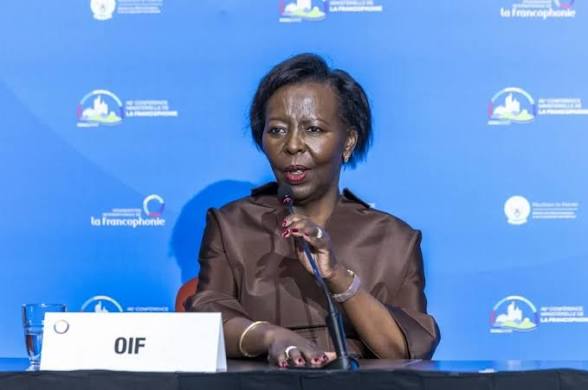
Rwanda’s Louise Mushikiwabo has reportedly been granted a one-year extension as Secretary-General of the International Organisation of La Francophonie (OIF) after member states failed to agree on her successor during the 20th Francophonie Summit in Phnom Penh, Cambodia.
The reported decision follows a contentious leadership contest that exposed deep diplomatic divisions involving Rwanda, the Democratic Republic of Congo (DRC) and France, raising questions about the future unity of the organisation.
Mushikiwabo, who has led the OIF since January 2019 and was re-elected in 2022, was seeking a third term. The organisation promotes French language, cultural cooperation, education, development and diplomacy among its member states.
However, her candidacy faced strong opposition from the DRC amid deteriorating relations between Kinshasa and Kigali.
The DRC accuses Rwanda of supporting the M23 armed group operating in eastern Congo, allegations Rwanda has consistently denied. The dispute has increasingly influenced regional diplomacy, extending into the Francophonie leadership election.
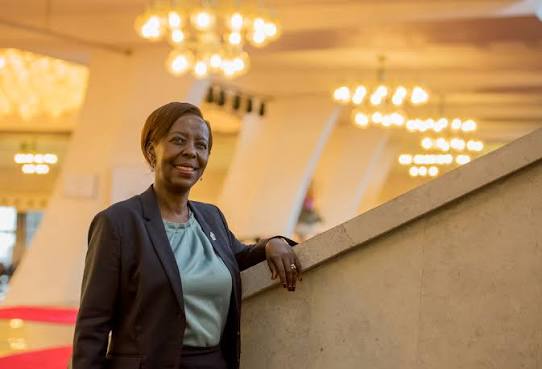
According to reports by Associated Press and Al Jazeera, Kinshasa threatened to withdraw from the OIF if Mushikiwabo secured another term, raising concerns about the potential loss of one of the world’s largest French-speaking countries.
Rwanda defended Mushikiwabo’s candidacy despite reported diplomatic pressure to withdraw her from the race.
Foreign Affairs Minister Olivier Nduhungirehe argued that Rwanda had the right to nominate its candidate under the organisation’s established procedures.
Reports indicated that French President Emmanuel Macron had sought Rwanda’s withdrawal of Mushikiwabo’s candidacy to prevent divisions within the Francophonie. Kigali reportedly rejected the request.
The DRC initially nominated Juliana Amato Lumumba, a former Congolese culture minister and daughter of Patrice Emery Lumumba, the country’s first prime minister. Kinshasa later reportedly considered supporting Romania’s Dacian Cioloș, a former prime minister and European commissioner, as a compromise candidate.
Mauritania’s Coumba Bâ was also among the contenders.
Despite the competing candidacies, member states reportedly failed to reach consensus, resulting in the reported extension.
Before becoming OIF Secretary-General, Mushikiwabo served as Rwanda’s Minister of Foreign Affairs and International Cooperation.
During her tenure, she has prioritised institutional reforms, financial accountability and expanding the organisation’s diplomatic role.
In July 2026, she outlined her vision for a third term, highlighting reforms that included reducing cooperation programmes from 49 to 20, strengthening financial oversight and decentralising activities through regional offices.
She has also advocated a stronger role for the OIF in addressing armed conflicts, democratic governance, climate change and disinformation.
Supporters argue that her experience and institutional reforms justify continuity. Critics, however, question whether her continued leadership could affect the organisation’s political neutrality amid Rwanda’s strained relations with the DRC.
The reported extension could provide temporary stability while member states continue negotiations.
The OIF traditionally appoints its Secretary-General for a four-year mandate. The 2026 election was expected to determine leadership for the 2027–2030 period.
A one-year extension would therefore represent a departure from the anticipated election cycle, raising questions about its institutional basis and the timeline for a new leadership selection.
The dispute also comes as the organisation faces broader challenges. Mali, Niger and Burkina Faso announced their withdrawals in March 2025 following political tensions and suspensions linked to military coups.
The potential departure of the DRC would further weaken the organisation’s demographic and political reach.
The Phnom Penh summit was held under the theme “Reinvesting in Peace for Shared Prosperity and Lasting Stability,” reflecting the OIF’s ambition to strengthen cooperation and contribute to international peace.
The reported extension of Mushikiwabo’s mandate highlights the growing political divisions within the Francophonie.
For Rwanda, it would preserve its influence within the organisation, while for the DRC, it would leave unresolved its opposition to her leadership. France and other member states would face the challenge of maintaining unity while seeking a lasting solution.
The coming months will determine whether the extension becomes a bridge towards consensus or merely postpones a leadership crisis that continues to test the organisation’s credibility and unity.