
 Daniel Nyionkuru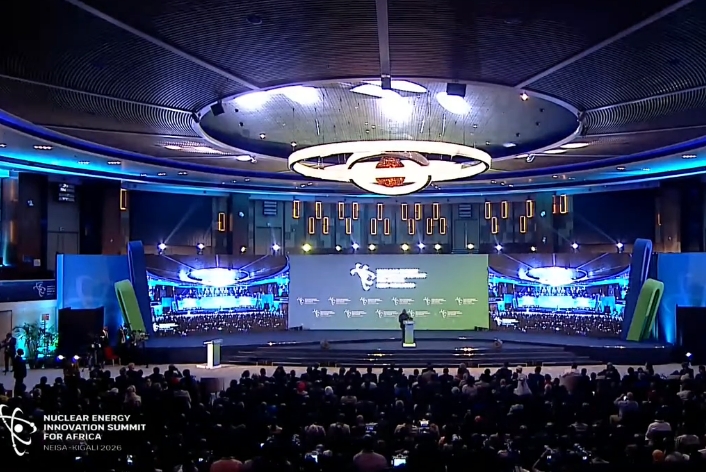
Leaders, experts, and investors from across Africa and beyond came together in Kigali, Rwanda on Tuesday for a major meeting called the Nuclear Energy Innovation Summit for Africa known as NAISA 2026. The goal was simple but big, to move Africa from just talking about nuclear energy to actually building it.
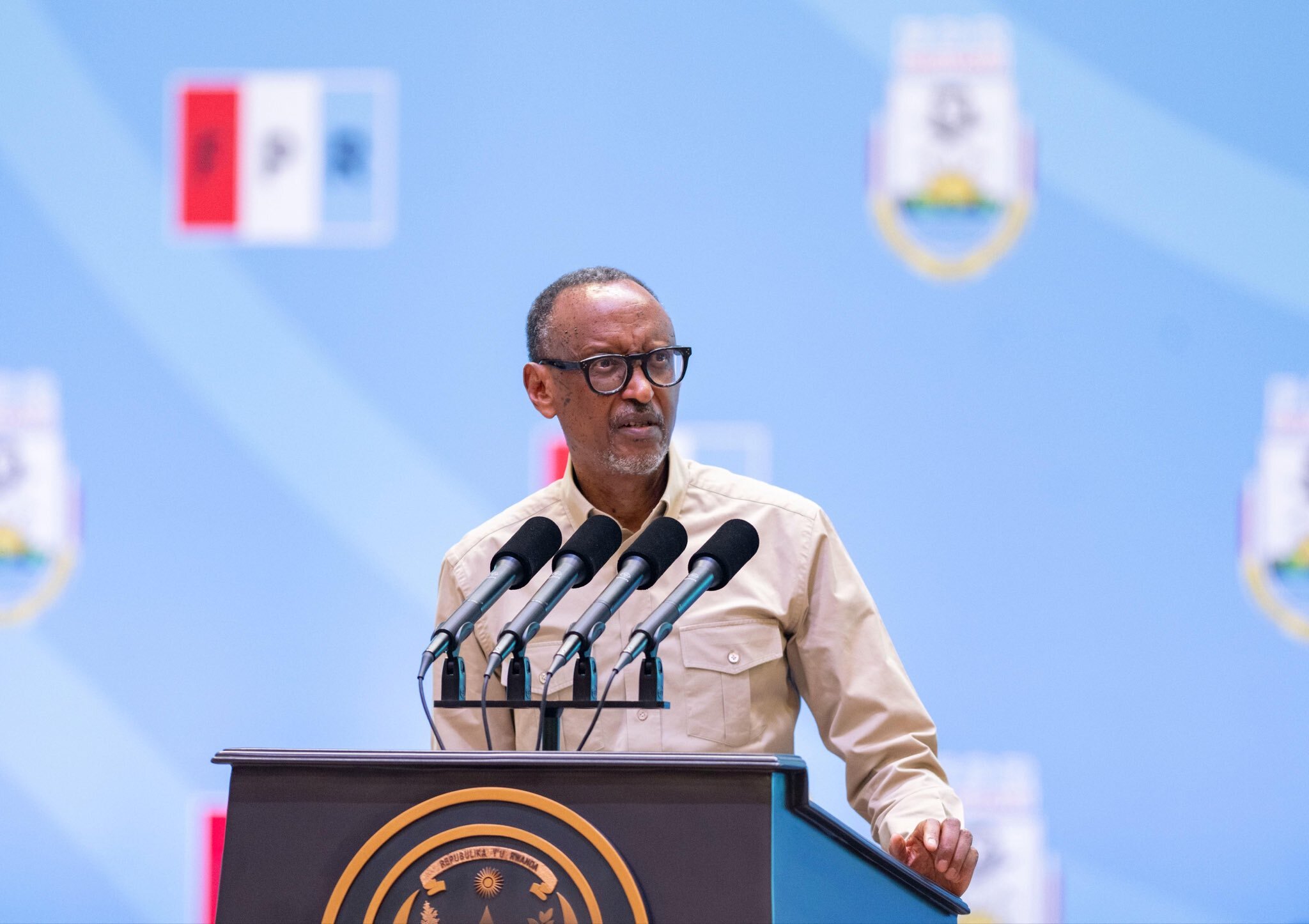
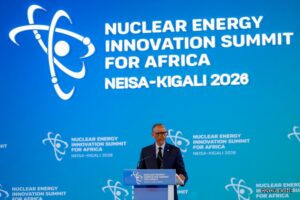
The meeting was hosted by Rwanda’s President Paul Kagame. Tanzania’s President Samia Suluhu Hassan also spoke. Both leaders made it clear that Africa is serious about nuclear power and that the time for action is now. “For Africa, energy is not simply a development issue. It is the foundation of industrial growth and competitiveness.” President Paul Kagame said.
Kagame shared good news for Rwanda. The country has passed an important international review a kind of test run by the United Nations nuclear agency, the IAEA that confirms Rwanda is on track to have nuclear power running by the early 2030s. This is a big step, because it shows the world that Rwanda is not just making promises it is doing the real work.
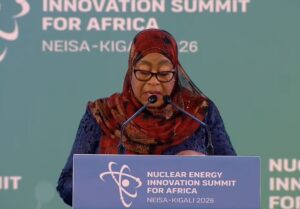
Hassan came with her own concrete plans for Tanzania. The country currently produces about 4,500 megawatts of electricity, but the need is growing fast. By 2030, Tanzania will need 8,000 megawatts. By 2050, that number could reach 70,000 megawatts. To help close that gap, Tanzania has created a plan to add 1,200 megawatts of nuclear power within the next ten years. The government has also set up a special organisation, called NEPIO, to manage the whole process.
Both presidents agreed on one thing that the biggest obstacle is not technology, and it is not the will to act. It is money and specifically, how difficult it is for African countries to borrow the large amounts needed to build nuclear power plants, as President of Tanzania Samia Suluhu Hassan said, “Africa needs new ways of financing, ways that share the risk and make nuclear projects possible to fund.”
The head of the IAEA, Rafael Grossi, told the summit that money for nuclear projects does exist in the world. But Hassan pushed back. She said the system through which that money is given out does not work well for Africa. The rules, conditions, and structures that international lenders use were not designed with African countries in mind. She called for new, creative ways of sharing financial risk so that African governments and investors can actually access the funds.
Kagame agreed. He said the reason many international investors are nervous about Africa is that they see it as too risky. His answer: Africa needs to build stronger rules and more reliable institutions. When investors see that laws are clear, governments are consistent, and money is managed well, they will feel safer putting their funds in African nuclear projects. “We must work to strengthen regulation, ensure consistency and accountability in order to build confidence and attract long-term capital,” he said.
When it comes to the type of nuclear technology Africa should use, both leaders pointed to the same answer: small modular reactors, often called SMRs. These are smaller versions of traditional nuclear power plants. They cost less to build, can be added one piece at a time, and can connect to smaller electricity grids making them a much better fit for most African countries than the giant nuclear plants built in Europe or the United States.
President Kagame was clear: “They are better suited to the realities of most African countries because they can be deployed gradually and integrated into smaller grids at a lower cost.” Hassan also said Tanzania is interested in exploring SMRs and similar technologies as scalable, flexible, and potentially suitable solutions for developing countries.
Some people worry that investing in nuclear energy means turning away from solar and wind power. Both presidents said that is the wrong way to think about it. Africa has huge amounts of sunshine and water ideal for solar and hydropower. But the problem with solar and wind is that they do not produce electricity all the time. At night, or when the wind stops, the power goes off.
Nuclear power runs all day, every day, without stopping. This makes it a strong partner for solar and wind, not a competitor. “Nuclear energy should not be viewed as competing with renewable energy,” Hassan said, but rather as complementing broader efforts to build resilient, sustainable, and reliable energy systems. “President Paul Kagame put it plainly, our economies cannot function efficiently on intermittent supply alone. “If countries work in isolation, progress will be slow and far more costly.” He said.
President Kagame ended his speech with a powerful reminder about Africa’s future. By 2050, Africa will have more working age people than any other continent in the world. That is a huge opportunity but only if there are jobs, factories, hospitals, and schools to support that population. And none of that is possible without electricity.
“The demographic shift can become one of the greatest economic advantages of this century,” President Kagame said, “if we prepare for it.” Without reliable energy, that preparation simply cannot happen.
The summit closed with an announcement that the next NAISA meeting will be held in Togo a sign that the nuclear conversation is spreading across the continent. Hassan reaffirmed Tanzania’s commitment to working with partners across Africa and the world to make nuclear energy a peaceful, practical, and lasting part of the continent’s future.
The message from Kigali was clear and hopeful, the plans are written, the organisations are in place, and the technology is getting cheaper. Now, Africa just needs the world’s financial system to catch up.

 RUSAGARA MUVUNANKIKO Valens
 Ivan Damascene Iradukunda