
 RUSAGARA MUVUNANKIKO Valens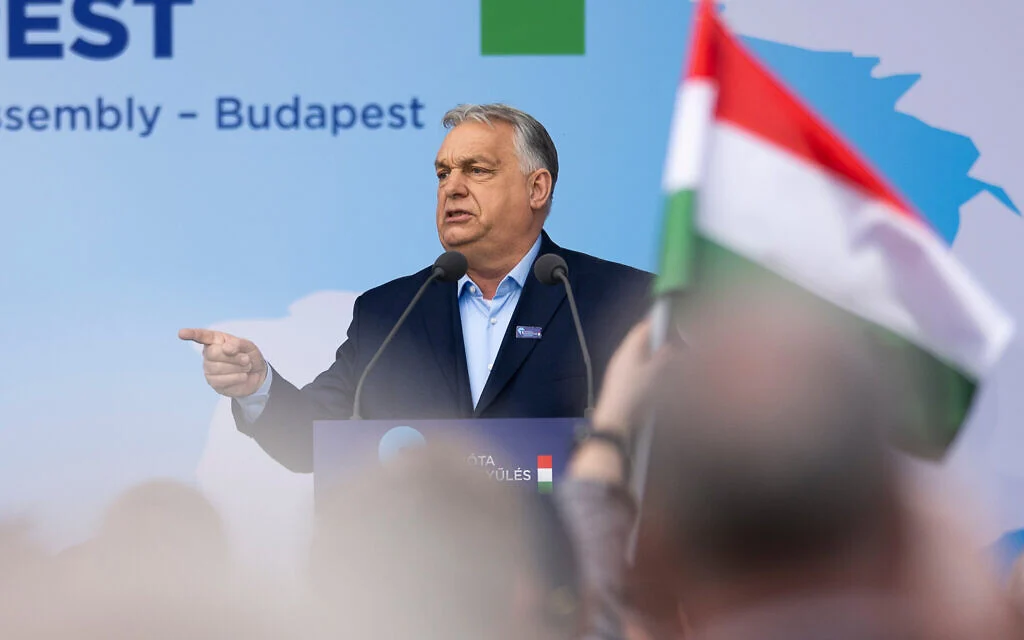
Who are the key players?
Péter Magyar is Hungary’s new Prime Minister, age 45. He is a lawyer and former government insider who dramatically broke from the ruling establishment and built a new political part Tisza to challenge the old order. He previously had ties to Fidesz (Orbán’s party) before leaving in 2024 to form Tisza.
Viktor Orbán was Hungary’s Prime Minister for 16 years (2010–2026). During that time, he packed the constitutional court with loyalists, dramatically curtailed independent media, and reshaped Hungary’s economy so that as much as 30% of its GDP ran through businesses connected to him. In 2014, he openly declared he was building an “illiberal” state, and a European Parliament report in 2022 said Hungary could no longer be considered a full democracy.
Tamás Sulyok is Hungary’s current President, a 70-year-old former lawyer. He served as President of the Constitutional Court from 2016 to 2024, before being elected as President of Hungary in 2024 as the Fidesz-KDNP candidate. His term is supposed to run until 2029.
How did Magyar come to power?
Hungary’s parliamentary elections on 12 April 2026 marked a historic political shift, ending Orbán’s 16-year rule. The vote recorded the highest turnout in a Hungarian general election since the fall of communism. Magyar’s Tisza party won a landslide victory, securing a two-thirds constitutional majority in parliament. This “supermajority” is extremely powerful it means Tisza has enough votes to actually rewrite the constitution itself.
Why does Magyar want Sulyok out?
Although the President of Hungary is mostly a ceremonial role, the position has real power to slow down or block new laws. The president can send laws back to parliament for reconsideration or refer them to the Constitutional Court which is still filled with Orbán-era judges.
Magyar has accused Sulyok of being Orbán’s “puppet,” arguing he was placed there to protect Fidesz’s interests even after losing the election. Magyar set a deadline of Sunday, May 31st for Sulyok’s resignation, and also demanded other senior officials leave office, including the Prosecutor General.
What happened on Monday?
Magyar met with Sulyok at the presidential Sándor Palace on Monday morning. Afterwards, at a press conference, Magyar announced the president had refused to resign. Magyar said: “Hungary does not belong to Tamás Sulyok nor to Viktor Orbán.”
Magyar then announced the government would move to amend the constitution to force Sulyok from office a process expected to take about a month.
What is Sulyok’s response?
Sulyok is standing firm. He argues that removing him would cause a constitutional crisis and damage Hungary’s international image. He also said he wanted to wait for the Venice Commission’s opinion the Venice Commission is an advisory body of the Council of Europe that gives legal advice on constitutional matters and insisted the situation should be handled in line with the constitution.
Orbán’s Fidesz party is backing Sulyok and calling Magyar’s actions an “unlawful ultimatum.”
Why does this matter beyond Hungary?
There is a massive financial stake involved. Under Orbán’s rule, the EU froze about €18 billion ($21 billion) in funds earmarked for Hungary due to democratic backsliding, corruption, and the treatment of LGBTQ issues.
Just last week, there was major progress: the EU announced it would unlock €16.4 billion ($19 billion) for Hungary, with Commission President Ursula von der Leyen confirming the release of funds frozen under Orbán. Magyar called it a “historic day.” However, Hungary must still meet all remaining EU conditions by the end of August or risk permanently losing the money.
Removing Orbán-era officials like Sulyok is part of this reform push. As long as Orbán loyalists can delay or block new laws, Hungary’s path to restoring rule of lawand unlocking the remaining funds is slower and harder.
The bigger picture
In its election manifesto, Magyar’s Tisza Party pledged to restore checks and balances, strengthen the independence of courts and prosecutors, establish a new anti-corruption body, and reform public procurement rules.
Experts describe this moment as more than just a change of government it is being called the beginning of a full change of regime. But undoing 16 years of systematic institutional changes is enormously complex, even with a supermajority in parliament. The standoff with President Sulyok is just the opening battle in what is likely to be a long and difficult process.