
 IRADUKUNDA Ivan Damascene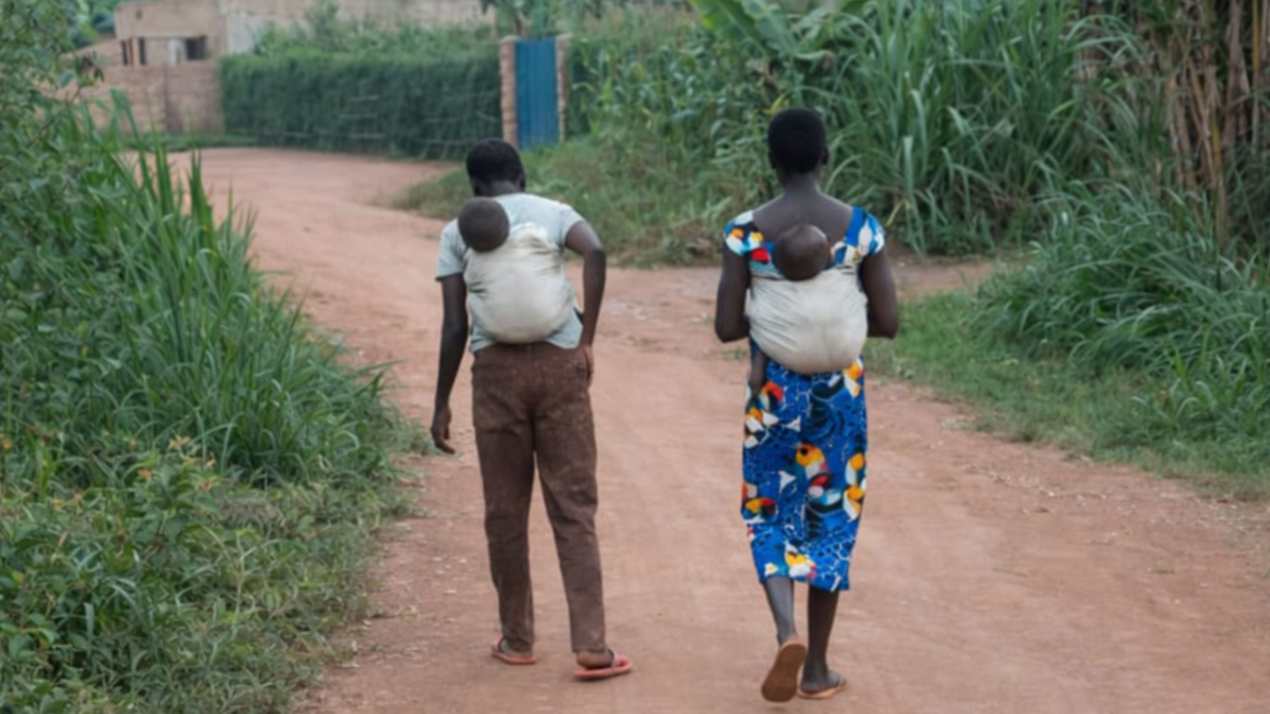
The story of two teenage sisters who gave birth at home while still minors in Imanzi Village, Kabare Cell, Muhazi Sector, went viral on X last week after it was shared by Arafat Mugabo. The post sparked serious questions about the responsibility to protect children, both within families and by authorities.
Arafat Mugabo, who was attending a funeral in Imanzi Village, reported that he saw two girls carrying babies on their backs. After speaking with them, he learned that one is 16 years old with a 7-month-old child, and the other is 17 years old with a 9–10-month-old child.
The girls told Arafat Mugabo that they were impregnated by older men known in the area, including a motorcycle taxi driver who later moved to Kigali. Their father, who lives with a disability, reportedly tried to follow up on the case with various institutions, but nothing was ever pursued.
One of the girls told Arafat Mugabo: “I still want to return to school next year, even though I’m living a very difficult life.”
The girls also said that more than 20 other children in Kabare Cell have faced similar abuse but their cases are not being addressed.
After Arafat Mugabo shared the story, users asked: “Whose responsibility is it to protect a child? The family or the authorities?”
Joseph Nkurunziza Ryarasa who is now the Executive Director at Never Again Rwanda, in his comment, gave a detailed response.
He said: “The responsibility belongs to both sides, but it is not interchangeable. The home is the first line of defense. Parental advice and vigilance are essential. No government institution can replace that.
But when a parent raises the alarm and the authorities remain silent, that is a governance problem. When known suspects walk free in the village while local leaders watch, that is not just negligence. It can amount to complicity.
Local leaders have resources that a poor family cannot access alone. Collaboration with Isange One Stop Center, RIB, and social welfare programs exists for cases like this. The question is whether leaders are willing to use them.
This is not a burden for one side to carry while the other looks on. When one side fails, it is the children who suffer.”
Evariste Murwanashyaka, Coordinator of CLADHO, the umbrella of human rights organizations, also commented.
“I agree that protecting a child is a shared responsibility, but accountability must match authority. Families provide the first layer of protection, but once abuse is reported, local leaders and state institutions have a legal and moral duty to act.
A parent can raise the alarm, but only institutions have the power to investigate, protect the victim, and hold perpetrators accountable. The true test of child protection is whether institutions respond when families call for help. When alerts are ignored, public trust collapses.
Justice for these girls does not need emotions alone. It needs concrete action from everyone entrusted with protecting them.”
The administration of Rwamagana District also responded to the story shared by Arafat Mugabo.
In a message posted on X, the District said: “We are deeply concerned by this case. We stand with the affected families and reaffirm our commitment to protecting children through community vigilance, parental guidance and strengthened efforts to prevent teenage pregnancies. Every child deserves a safe and hopeful future.”
Article 133 of Law Nº 68/2018 of 30/08/2018 on offenses and penalties in general states that anyone who commits child defilement is liable to imprisonment of not less than 20 years and not more than 25 years.
Those who commented on the story agreed that the voices of these girls must go beyond a tweet. One said: “They deserve justice.”
In compliance with Law N°71/2018 of 31/08/2018 on the protection of the child, this publication has withheld the names, photos, or any identifying details of the minors.
This publication will continue to follow up on this case after Arafat Mugabo’s post to see whether concrete action is being taken by the responsible institutions.


 RUSAGARA MUVUNANKIKO Valens