
 RUSAGARA MUVUNANKIKO Valens
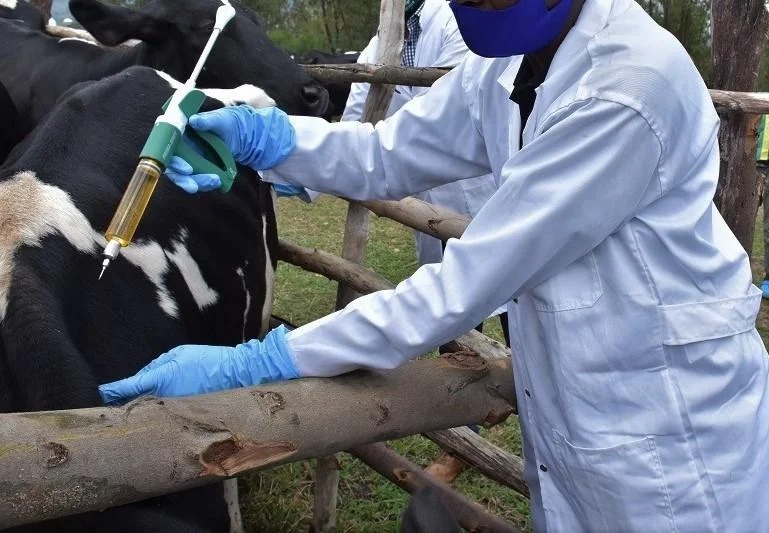
Residues from medicines used to treat livestock can remain in an animal’s body after treatment and may enter milk or meat. When milk is collected before the recommended withdrawal period has elapsed, it may fail to meet safety and quality standards, potentially causing financial losses for farmers and posing risks to consumers.
Some dairy farmers say they were unaware that medicines administered to cattle could remain in milk, while milk collection centre operators report using testing equipment to identify milk that does not meet the required standards.
Jean Paul Niyonizera, a resident of Nyamiyaga Sector in Kamonyi District, says he did not know that medicines administered to cattle could remain in their bodies and affect milk quality. He rarely delivers milk to a collection centre, explaining that his household consumes some of the milk while the rest is sold to neighbours.
“I did not know that medicines given to an animal could remain in its body for some time and affect its milk. This does not happen to me often because I rarely deliver milk to a collection centre. However, it may have happened without my knowledge because my family and I, drink some of the milk, while I sell the rest to neighbours. From now on, I will pay closer attention and check whether my cows have been treated with medicines before milking them,” he said.
David Hategekimana, a cattle farmer in Nyabihu District, says he understands the importance of ensuring that milk meets safety requirements before delivering it to a collection centre. He explains that rejected milk represents a financial loss, particularly for farmers who depend on selling large quantities.
“When I deliver milk, I have to be careful about everything because if my milk is rejected, I lose money. I must therefore understand anything that could damage the quality of my milk and avoid it. When my cow has been treated with medicine, I do not deliver its milk for at least a week because a veterinary professional told me that the milk could be contaminated and should not be consumed,” he said.
Didas Nsengumukiza, a milk collection centre operator in Nyagatare District, says they frequently encounter milk that does not meet the required standards. He explains that the centre uses testing equipment to check milk before accepting it.
“We frequently encounter this problem. However, we have equipment for testing milk, and we can identify when it contains drug residues. We also have methods for testing milk that has been diluted with water. Whenever a farmer brings milk to the collection centre, we conduct these tests because we cannot be certain of its origin. If we find drug residues, we do not accept the milk; we return it to the farmer because we cannot give such milk to Rwandans,” he said.
Dr Eugene Niyonzima, Animal Resources Processing & Biotechnology Division Manager at the Rwanda Agriculture and Animal Resources Development Board (RAB), explains that residues from veterinary medicines may remain in an animal’s body after treatment and can enter milk or meat.
“The time residues remain in an animal depends on the medicine administered. Some medicines may leave residues for three to four days, while others may take more than seven days before the withdrawal period is completed.”, He said.
Dr Niyonzima explains: “Veterinary professionals should inform farmers how long they must wait before collecting milk intended for human consumption. Farmers must observe the specified withdrawal period to ensure that residues have fallen to permitted levels before the milk or meat enters the food supply.”
He added: “milk and meat can be tested using appropriate methods to establish whether they contain drug residues. Milk that fails to meet the applicable safety requirements should not be accepted for human consumption. The same precaution applies to animals intended for slaughter before the required withdrawal period has elapsed”.
Dr Niyonzima advises farmers to keep track of when their animals receive treatment, identify the medicines administered and follow veterinary instructions. Such practices can help protect consumers while reducing financial losses associated with rejected milk.
A 2025 study titled Milk Safety in Rwanda: Examining Practices, Microbial Contamination and Antibiotic Residues Along the Milk Value Chain, co-authored by Dr Eugene Niyonzima and other researchers, examined milk safety and antibiotic residues along Rwanda’s milk value chain.
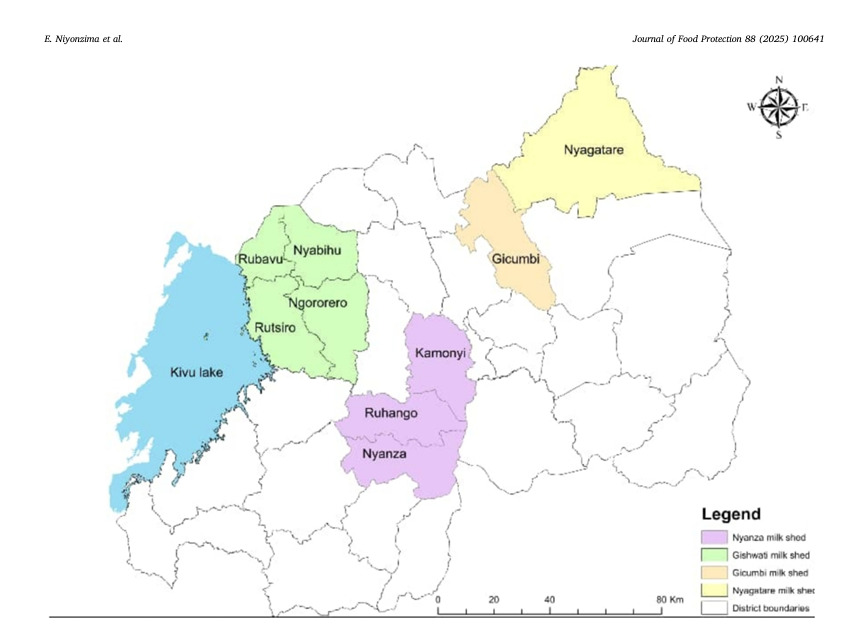
The researchers tested 390 raw milk samples collected from four major dairy-producing areas: Gicumbi, Gishwati, Nyagatare and Nyanza. The study also gathered information from 144 farmers, 70 milk transporters, 12 milk collection centres and 46 milk retailers.
The findings showed that 48.5% of the milk samples tested contained antibiotic residues. Tetracyclines were detected in 40% of the samples, streptomycin in 6.2%, and beta-lactams in 2.3%. These findings apply to the samples examined in the study and should not be interpreted as representing all milk produced or consumed across Rwanda.
The findings underline the need for better awareness among farmers, stronger monitoring of milk quality and improved handling practices throughout the dairy supply chain.
According to the Ministry of Agriculture and Animal Resources (MINAGRI) annual report for the 2024/2025 financial year, Rwanda produced 1,152,514 tonnes of milk during the reporting period.
The report also indicates that milk collection centres collected 95,872,149 litres during the same financial year, with their capacity utilised at 60.25%.
These figures demonstrate the importance of the dairy sector to Rwanda’s livestock industry and the need to maintain quality standards from the farm to the consumer. With millions of litres passing through collection centres, effective testing and responsible veterinary medicine use are essential to preventing unsafe milk from entering the market.