
 RUSAGARA MUVUNANKIKO Valens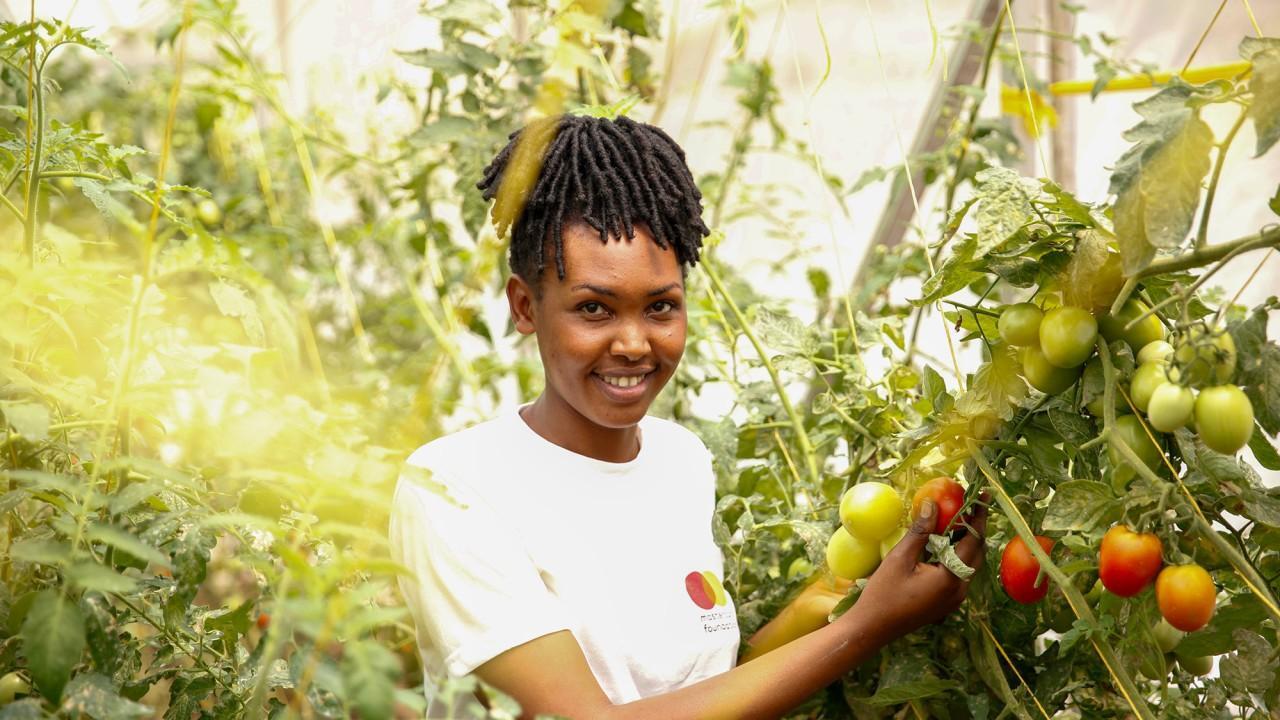
Rwanda’s agriculture sector grew by 4% in the second quarter of 2026, down from 8% recorded in the same period of 2025, according to the National Institute of Statistics of Rwanda (NISR). Young people working in agriculture say stronger use of technology, data, market information and value addition could help accelerate growth in the coming year.
Felix Ugirashebuja, a Youth Agritech and consultant working in Gasabo District, says young farmers should move from subsistence farming to commercial agriculture guided by reliable data and market information. He also calls for greater investment in mechanisation, irrigation, IoT and Artificial Intelligence to improve productivity.
“We should practice agriculture that produces for the market. We need to move from subsistence farming to commercial agriculture, but we have to use data,” he said.
Ugirashebuja also sees mechanisation, irrigation and emerging technologies such as the Internet of Things (IoT) and artificial intelligence (AI) as important tools for transforming agriculture. He says these technologies should not be viewed as tools reserved for other sectors because they can also help farmers improve productivity and make better decisions.
“We need to put more effort into technology and mechanisation. Agriculture should not depend only on manual labour. We need irrigation, and we should increasingly use IoT and AI because these technologies are not only for other sectors; we need them in agriculture too,” he said.
Jean Pierre Munyemana, a young farmer and livestock keeper and founder of SmartFarm Solution, says youth participation should go beyond simply increasing the number of farmers.
“Young people should look at agriculture as a business. They need to understand what is required and acquire the knowledge necessary to generate meaningful production.”
He also believes technology can help Rwanda increase production without necessarily expanding the amount of land under cultivation.
“Young people can accelerate the adoption of modern agriculture. This can help increase production on land that is already being cultivated rather than simply waiting for more land to become available.”
Steven Irabizi, a farmer producing fruits and vegetables in Kinyinya Sector, Gasabo District, similarly believes that young people can play a major role in increasing agricultural productivity by combining farming with technology and business development.
“Young people can play a major role in increasing agricultural production through the use of technology, increasing productivity per hectare, processing and adding value to agricultural products, and promoting commercial agriculture,” Irabizi said.
He also called for stronger support for young farmers through training, access to finance and markets so that more young people can see agriculture as a viable profession.
Jean Pierre Munyemana, a young farmer and livestock keeper who studied agriculture at university and runs SmartFarm Solution, he is known as AGRONOMME on Social Media, an agricultural and livestock company, says youth participation can help agriculture contribute more significantly to Rwanda’s overall economic output.
“I believe young people can play a very significant role in increasing agricultural production and making the agricultural sector contribute more to the country’s overall economic output,” Munyemana said.
For Munyemana, the first priority should be changing the way young people perceive agriculture. He says farming should be treated as a business rather than simply a means of survival.
“Young people should look at agriculture as a business. They need to understand what is required and acquire the knowledge necessary to generate meaningful production,” he said.
He also points to technology as an opportunity for young farmers to improve productivity on existing farmland. “Young people can accelerate the adoption of modern agriculture because they can access technology more easily compared with older generations. This can help increase production on land that is already being cultivated rather than simply waiting for more land to become available,” Munyemana explained.
This approach, he argues, would redefine the role of youth in agriculture. “The role of young people is not simply to increase the number of farmers. It is to increase productivity, use technology in agriculture, build markets, add value to production and create new businesses across the agricultural value chain,” he said.
At the organisational level, the Rwanda Youth in Agribusiness Forum (RYAF) is also working to encourage more young people to engage in agriculture and improve the way they farm.
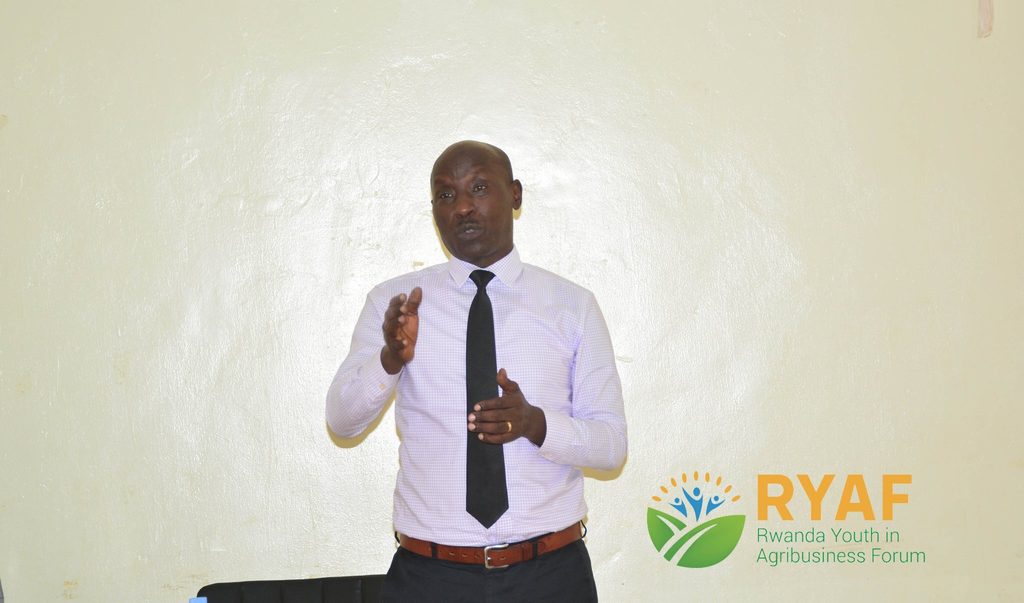
Jean Marie Vianney Rwiririza, Chief Executive Officer of RYAF, said one of the main reasons the organisation was established was to change young people’s perception of agriculture.
“The first reason RYAF was established was to change the mindset of young people. We found that agriculture was often left to older generations.”
The organisation also works with different institutions to facilitate training and provide agricultural equipment where necessary.
As Rwanda prepares for the next agricultural season, RYAF says it is already taking steps to encourage young farmers to prepare early and improve their chances of achieving higher production.
Rwiririza said the organisation works with its representatives in different districts to prepare young farmers before the season begins.
“When we prepare for a new season, we also hold meetings and tell our representatives in the districts to encourage young people to prepare. We tell them to prepare their fields before the rains arrive,” he said.
He added that young farmers are currently being encouraged to prepare their land, secure seeds early and register for Smart Nkunganire so that they can access agricultural inputs such as fertiliser.
“We have been encouraging them to prepare their fields, look for seeds early and register for Smart Nkunganire so that they can get fertiliser,” Rwiririza said.
RYAF is also advising farmers who rent land to consider locations where irrigation will be possible. “We are also asking those who rent farmland to choose land close to water sources so that they can irrigate when rainfall becomes limited,” he said.
These preparations, Rwiririza believes, can help increase agricultural production in the coming season.
“We are confident that production will increase,” he said, adding that RYAF intends to contribute to improving the agricultural growth rate next year.
According to Rwanda’s National Institute of Statistics (NISR), young people play a significant role in the country’s agricultural sector. The EICV7 2023/24 Youth Thematic Report shows that 53% of employed youth aged 16–30 were working in agriculture, making it the largest employment sector for young people. The report estimates Rwanda’s youth population at about 3.6 million, representing 27.1% of the country’s population.
Meanwhile, the 2024 Agricultural Household Survey found that youth aged 16–30 accounted for 30.7% of adults engaged in agricultural activities in agricultural households.
These figures underline the important role of young people in Rwanda’s agriculture and the potential for greater productivity through technology, skills, access to finance, markets and value addition.