
 Muhire Obed
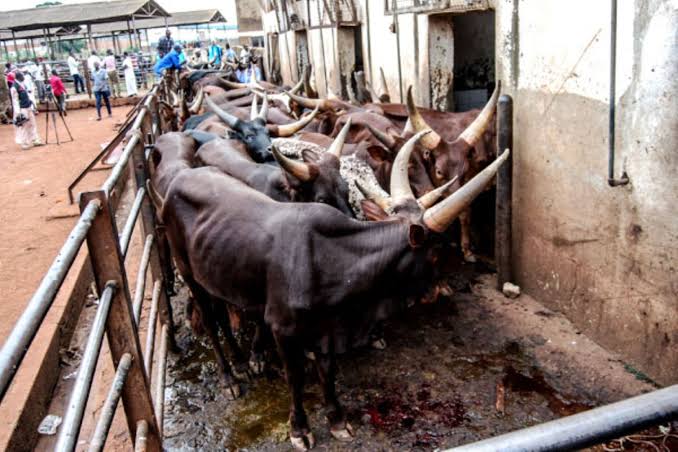
Residents of Rwimiyaga Sector and surrounding areas in Nyagatare District have appealed to the government to establish mini cattle slaughterhouses closer to their communities, citing high transportation costs and the long distances they must travel to access existing facilities.
The concerns were raised during the 2026 World Food Day celebrations in Nyagatare District, where livestock farmers highlighted challenges affecting their activities, particularly access to slaughtering and veterinary services.
Njenje Steven a farmers previously slaughtered cattle in his backyards whenever necessary, but government regulations requiring the use of designated slaughterhouses which have made the process expensive and time-consuming.
“Previously, I could easily slaughter a cow in my backyard. But now I have to take it to a slaughterhouse, which is very far. We do not have vehicles to transport our cattle, and when we reach there, we also have to pay additional charges. Imagine a farmer with several cows; the expenses become overwhelming. We are asking the government to bring veterinary services closer to our farms because this arrangement is costing us a lot of money,” Njenje said.
Responding to the concerns, Dr Solange Uwituze, Minister of State in the Ministry of Agriculture and Animal Resources, said the government would not reverse its decision prohibiting the slaughter of animals in residential compounds and plantations, citing public health and food safety concerns.
However, she acknowledged the residents’ challenges and proposed establishing mini slaughterhouses in strategic locations to bring services closer to livestock farmers.
“The government cannot allow people to slaughter animals in their backyards and plantations. However, we can establish mini slaughterhouses closer to the people to address these challenges,” Dr Uwituze said.

She explained that uncontrolled slaughtering and improper meat storage could expose people attending weddings, funerals and other social gatherings to foodborne illnesses.
The Minister urged residents to remain patient and continue using designated slaughterhouses as local authorities explore solutions.
She specifically asked Nyagatare District leaders to consider establishing a mini slaughterhouse near Rwimiyaga and another in Cyirebe, which could also serve parts of Karangazi.
“We can identify strategic locations for these mini slaughterhouses. I ask district leaders to help us because we do not want people slaughtering animals in their plantations,” she added.
According to MINAGRI’s 2024/2025 Annual Report, Rwanda’s cattle population increased from 1,371,829 in 2020 to 1,727,913 in 2025, representing approximately 26% growth.
The report also indicates that national meat production increased from 168,687 metric tonnes in 2020 to 219,523 metric tonnes in 2025.Meanwhile, a study examining 1,232 cattle health cases in Nyagatare identified East Coast Fever in 454 cases (36.8%) and anaplasmosis in 215 cases (17.4%), highlighting the importance of accessible veterinary services.
These figures demonstrate the importance of investing in livestock infrastructure, animal healthcare and safe meat-handling facilities.

 RUSAGARA MUVUNANKIKO Valens
 Kwizera Yves Beni