

 RUSAGARA MUVUNANKIKO Valens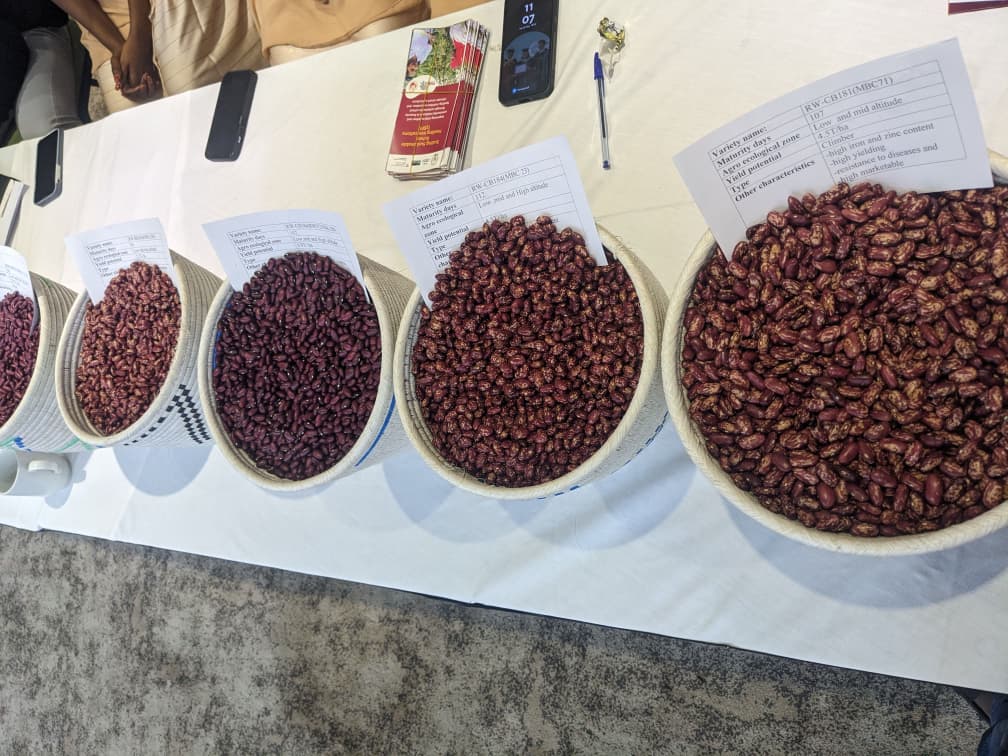
Rwanda has taken a significant step forward in its fight against malnutrition with the launch of an ambitious new initiative that places nutrition at the heart of the country’s education system.
The Scaling Sustainable School Feeding Innovations in Rwanda (3SFI) project, officially launched in Rusizi District, is set to transform how schoolchildren eat and how farming communities grow by championing the power of iron-rich beans and nutrient-dense vegetables.
A vision rooted in research
The project is being implemented by the Alliance of Bioversity International and CIAT through the Pan-Africa Bean Research Alliance (PABRA), in close partnership with the Government of Rwanda and the Embassy of Switzerland in Rwanda. Far from being a hastily assembled intervention, 3SFI is built on years of rigorous agricultural research and field testing that has culminated in bean varieties specifically developed to address nutritional deficiencies common among children and adults alike.
Dr. Jean Claude Rubyogo, Director of the Bean Program at the Alliance of Bioversity International and CIAT, was candid about the importance of ensuring that scientific breakthroughs actually reach the people who need them most. “If we invest $1.25 million in developing a bean variety and it never reaches the people who should use it, that is a loss,” he said. “That is why we are very pleased to see this innovation reaching schools and communities.”
His words underscore a challenge that plagues agricultural research across the developing world the gap between laboratory innovation and real-world impact. With 3SFI, that gap is actively being bridged.
Beyond nutritional value, the iron-rich beans have earned praise from an unexpected audience. During school visits, Dr. Rubyogo and his colleagues discovered that both students and teachers appreciated the beans not only for their health benefits, but for their superior taste and shorter cooking times practical advantages that could prove crucial in encouraging wider community adoption.
Feeding bodies and minds
The link between nutrition and learning is well established, and Rwandan officials are keenly aware of it. Richard Kabana, a senior official at the Ministry of Local Government (MINALOC), emphasized that healthy school feeding programs are not merely a welfare initiative they are an investment in the country’s future workforce and intellectual capital.
“We cannot build a skilled and capable population without healthy children who are able to learn properly,” Kabana stated, noting that the project is firmly aligned with Rwanda’s Second National Strategy for Transformation (NST2), which prioritizes the development of capable human capital. He also acknowledged that for communities to fully embrace iron-rich beans, factors such as cooking time, taste, and energy consumption must be carefully considered and communicated.
Dr. Rubyogo reinforced this holistic thinking, noting that schools are only part of the nutritional equation. “Children receive only 30% to 40% of their daily food requirements at school, while the rest comes from home,” he explained. “That is why we want this project to expand to parents and communities as well.” This community-outward approach recognizes that lasting dietary change cannot be confined to school canteens alone it must take root in homes, gardens, and local markets.
Local leadership and community buy-In
Rusizi District Mayor Phanuel Sindayiheba welcomed the initiative with enthusiasm, highlighting the tangible impact already being felt among children and parents in his district. “We observed that children enjoy these iron-rich beans, and some parents told us they cook quickly and taste good,” he said. “This will encourage communities to adopt them.”
Mayor Sindayiheba also called for more comparative research into the economic benefits of growing iron-rich beans versus conventional varieties a pragmatic concern that speaks to the realities facing smallholder farmers who must weigh nutritional benefits against profitability. Convincing farming communities to switch to new varieties requires not only evidence of better health outcomes, but also a compelling economic case.
A Swiss-Rwandan partnership for Africa
The Embassy of Switzerland in Rwanda has been a cornerstone partner in bringing this project to life. Ueli Mauderli, Acting Head of Cooperation and Deputy Head of Mission, described the initiative as a reflection of the enduring partnership between the two nations in advancing human welfare.
“This project is not only about feeding students,” Mauderli said. “It is also about transforming food systems and promoting nutrition-sensitive agriculture.” He went further, expressing confidence that Rwanda has the potential to serve as a continental model, demonstrating to the rest of Africa how locally produced food can be harnessed to build sustainable, effective school feeding programs. “School feeding is one of the success stories Rwanda can showcase to the rest of Africa as an example of development driven by agriculture and nutrition,” he added.
Rwanda: A Nation built on beans
Perhaps no country in the world is better positioned to lead this kind of initiative than Rwanda. Dr. Olivier Kamana, Permanent Secretary at the Ministry of Agriculture and Animal Resources (MINAGRI), pointed out that the average Rwandan consumes an extraordinary 30.8 kilograms of beans per year making Rwanda the world’s leading country in per capita bean consumption. “Rwandans consume more beans than people anywhere else in the world,” he noted. “These beans are highly nutritious and contribute to good health.”
Dr. Kamana also made the case for Rwanda’s unique suitability as a hub for bean research, citing the country’s favorable climate and soil conditions. “Because of our climate and soil conditions, Rwanda is well suited for bean production. This is why our country has become one of the leading places for bean research capable of producing innovations that can guide other African countries,” he said.
His vision extends beyond mere consumption. He envisions schools becoming living demonstration centers where children not only eat well, but also learn about farming practices, healthy dietary habits, and environmental stewardship cultivating the next generation of informed, food-secure citizens.
Impact on the ground
Since its launch in November 2025, the 3SFI project has already made remarkable strides. The initiative has expanded to 509 schools across the districts of Karongi, Nyamasheke, and Rusizi in Rwanda’s Western Province. Over 1,110 school staff members have been trained in agriculture-related practices, including 999 who received specific instruction in post-harvest handling techniques. An additional 629 community agents have been equipped to promote positive nutritional behavioral change at the grassroots level.
On the supply side, the project has distributed 18.5 metric tons of bean seed and 427 metric tons of lime, while conducting soil testing in 283 schools to optimize growing conditions. When the harvest comes in, the project is expected to yield 427 metric tons of beans, ultimately benefiting an estimated 445,115 schoolchildren across the Western Province.
Funded at a cost of more than RWF 1.9 billion, the project is scheduled to conclude in September 2026 leaving behind, it is hoped, not just better-nourished children, but a transformed food culture that will endure long after the project’s formal end.
A seed planted for the future
The 3SFI initiative represents far more than a school lunch program. It is a carefully designed, multi-layered intervention that connects agricultural innovation, public health, education policy, and community development into a single, coherent strategy. By placing iron-rich beans a crop already deeply woven into Rwandan culture and cuisine at the center of school feeding programs, the project builds on existing habits rather than trying to replace them, making adoption more natural and sustainable.
If it succeeds as envisioned, Rwanda may well emerge as the blueprint for how African nations can leverage local agricultural strengths to nourish their youngest generations and, in doing so, lay the groundwork for a healthier, more capable, and more prosperous future.
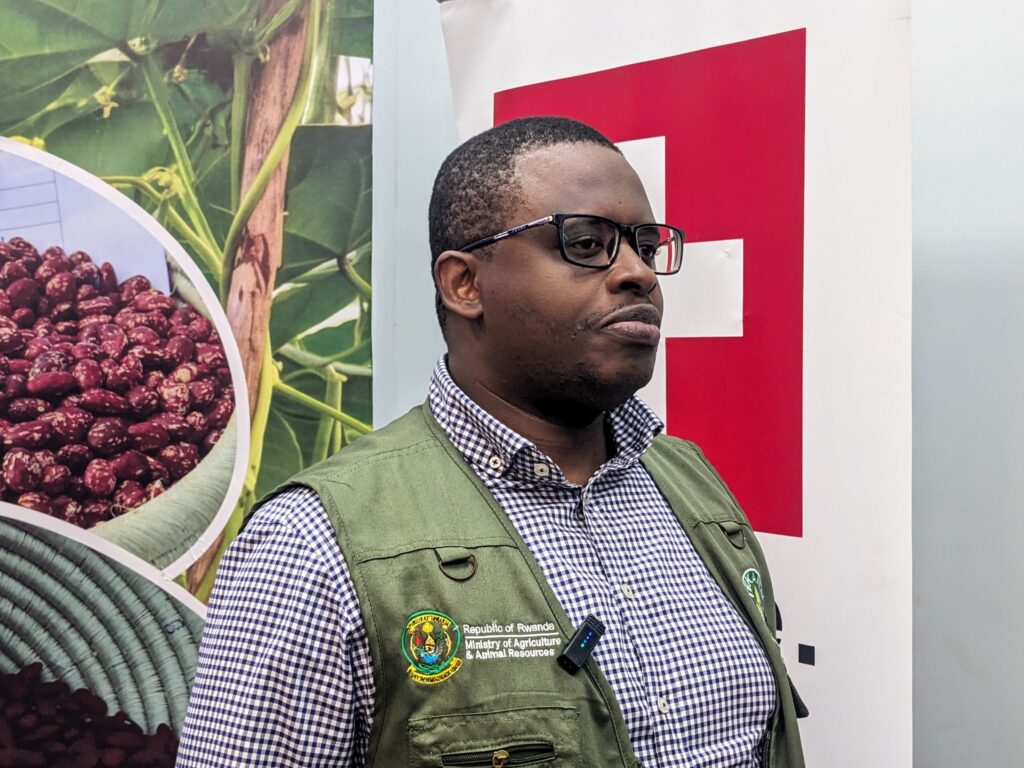 Dr. Olivier Kamana, Permanent Secretary at the Rwanda Ministry of Agriculture and Animal Resources
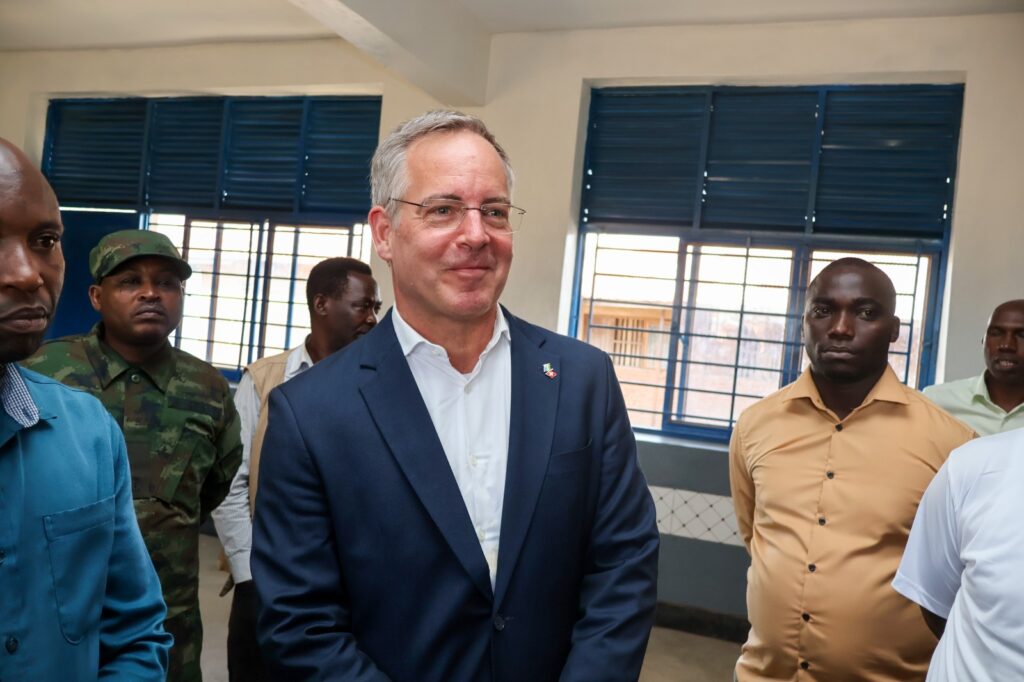 Ueli Mauderli, Acting Head of Cooperation and Deputy Head of Mission at the Embassy of Switzerland to Rwanda
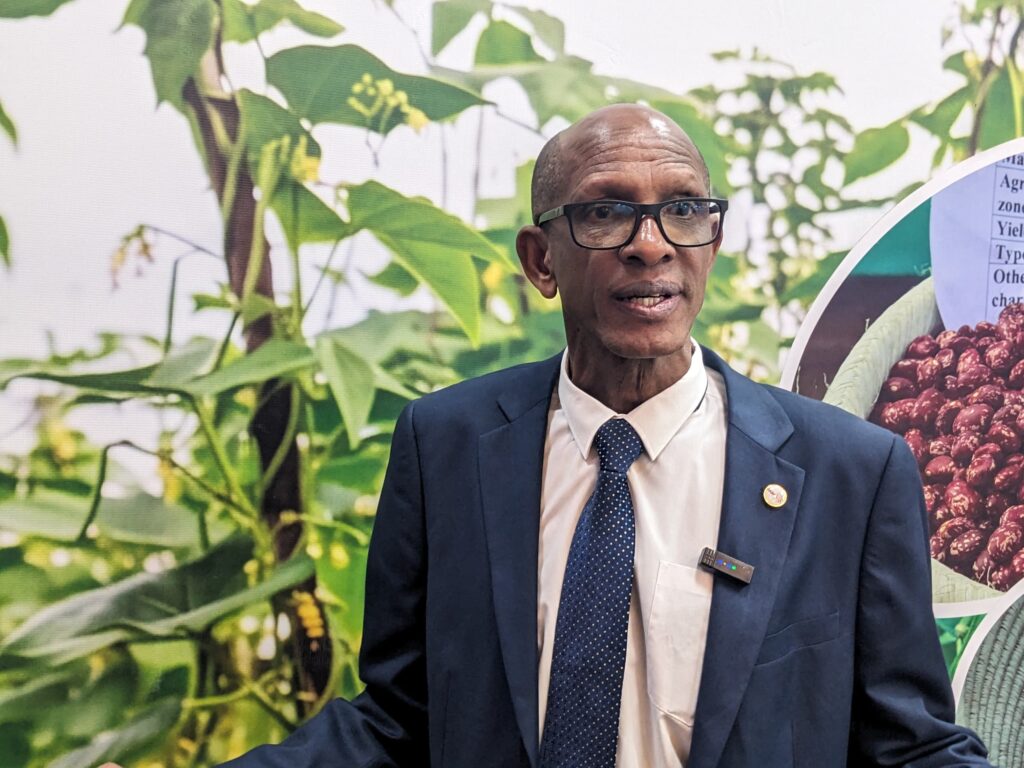 Jean Claude Rubyogo, Director of the Pan-Africa Bean Research Alliance (PABRA) and the Global Bean Program Leader at the Alliance of Bioversity and Grobal Bean Program Leader
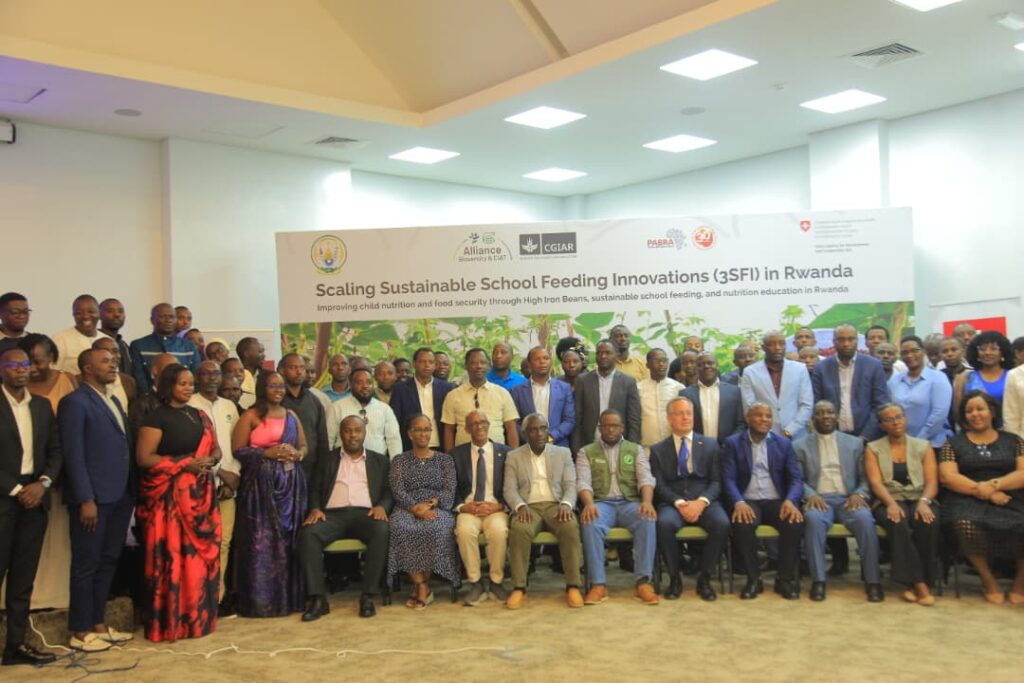 Launch of the Scaling Sustainable School Feeding Innovations in Rwanda (3SFI) project in Rusizi District, an initiative aimed at strengthening school feeding through iron-rich beans and nutrition-sensitive agriculture
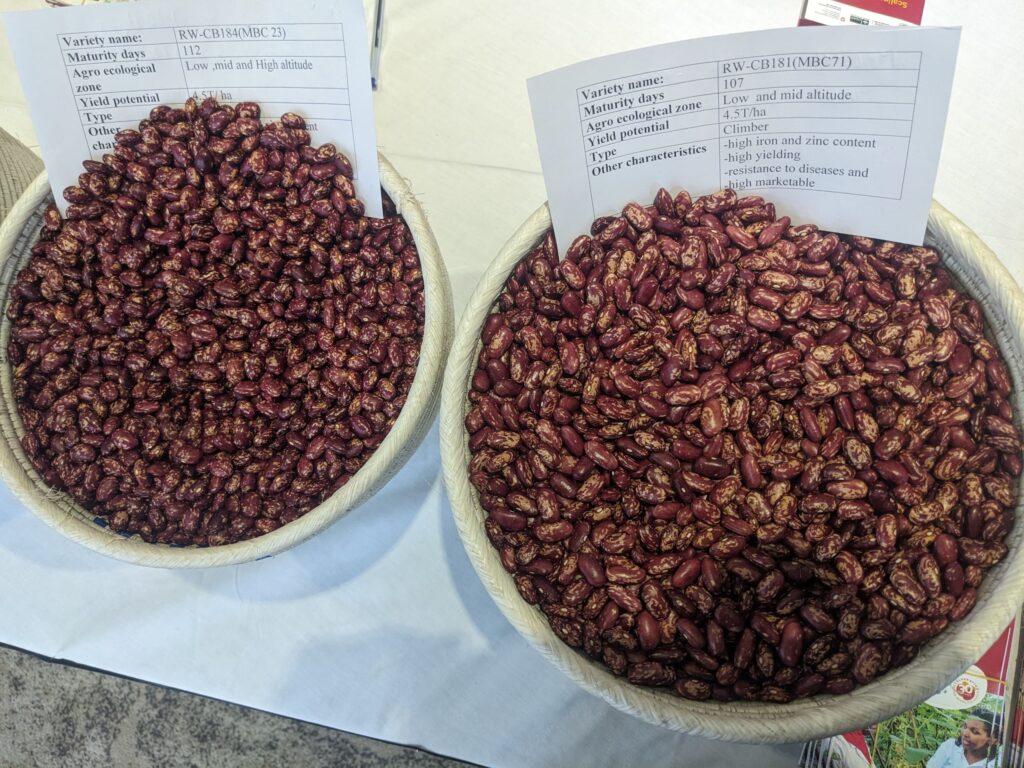 Iron-rich beans are becoming a powerful tool in Rwanda’s mission to raise healthier, stronger, and better-performing students
Iron-rich bean varieties showcased during the launch of the 3SFI project in Rusizi District, as Rwanda strengthens efforts to fight malnutrition through school feeding and nutrition-sensitive agriculture


