
 Ibyimana Cofi
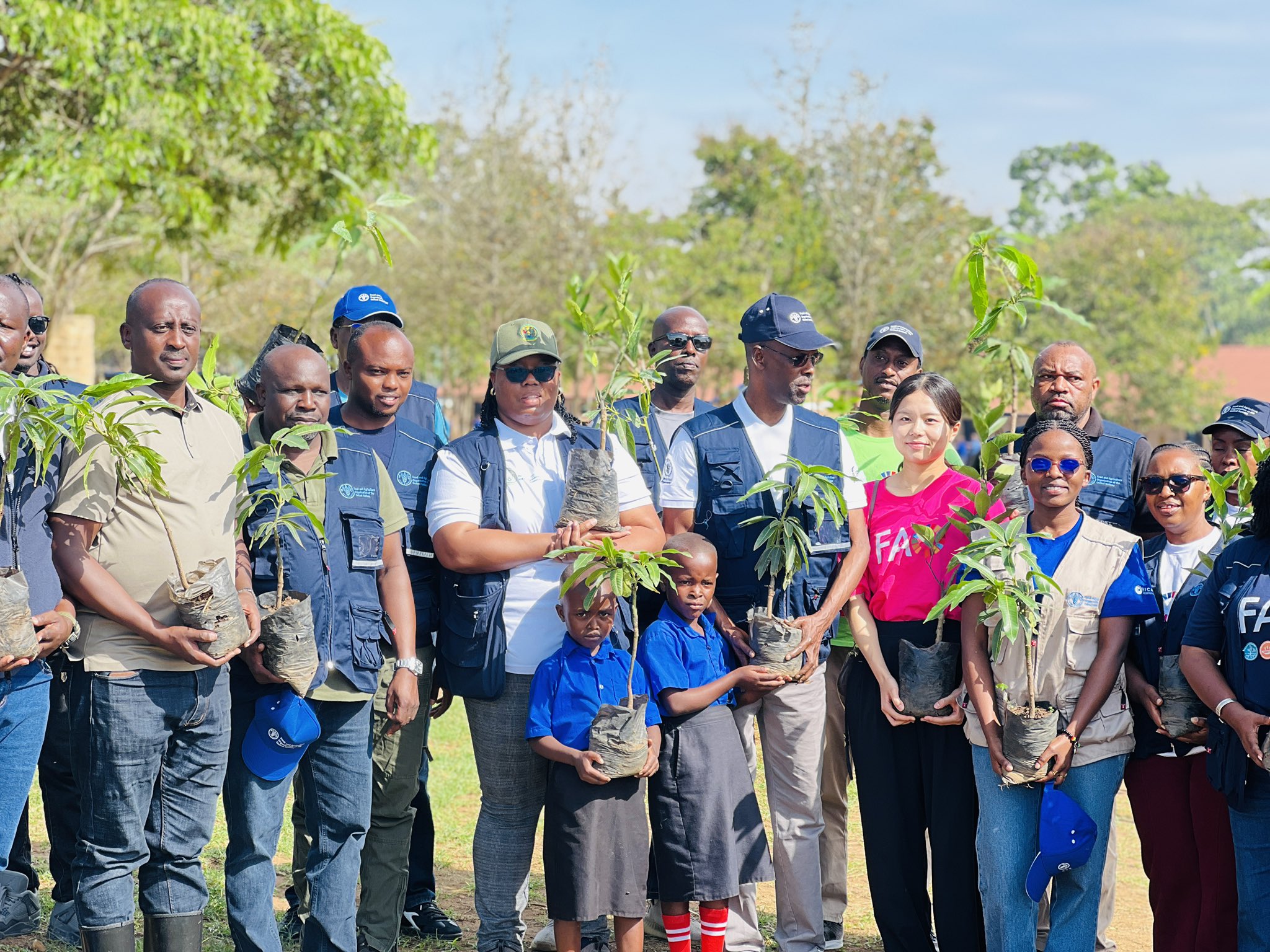
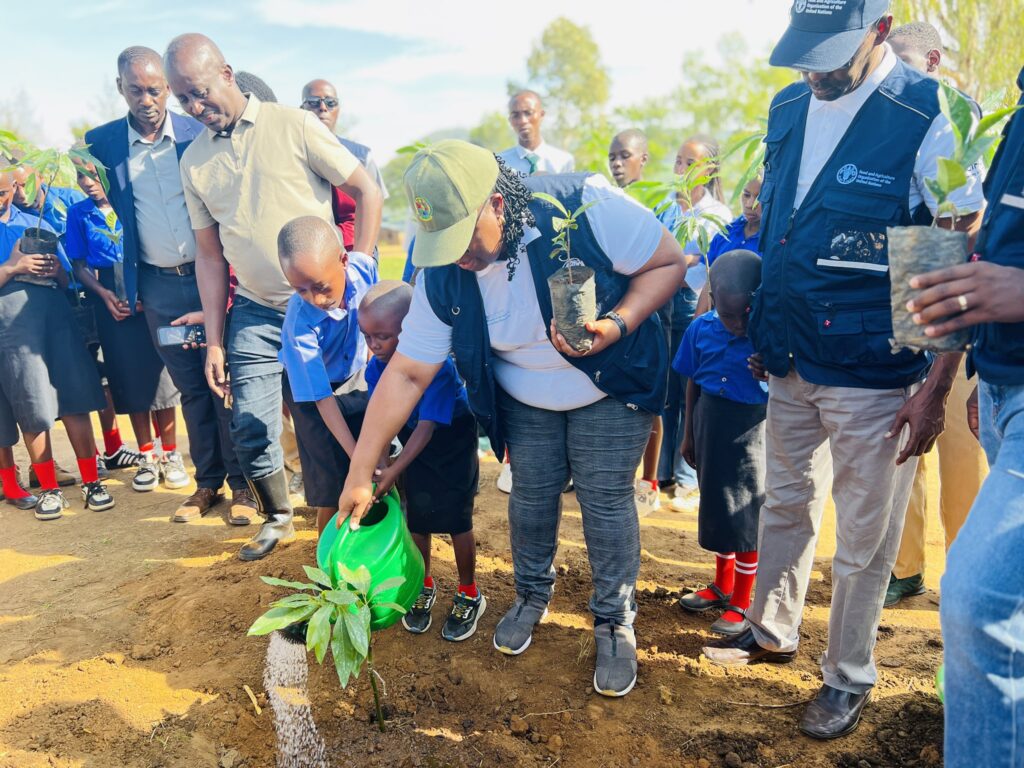
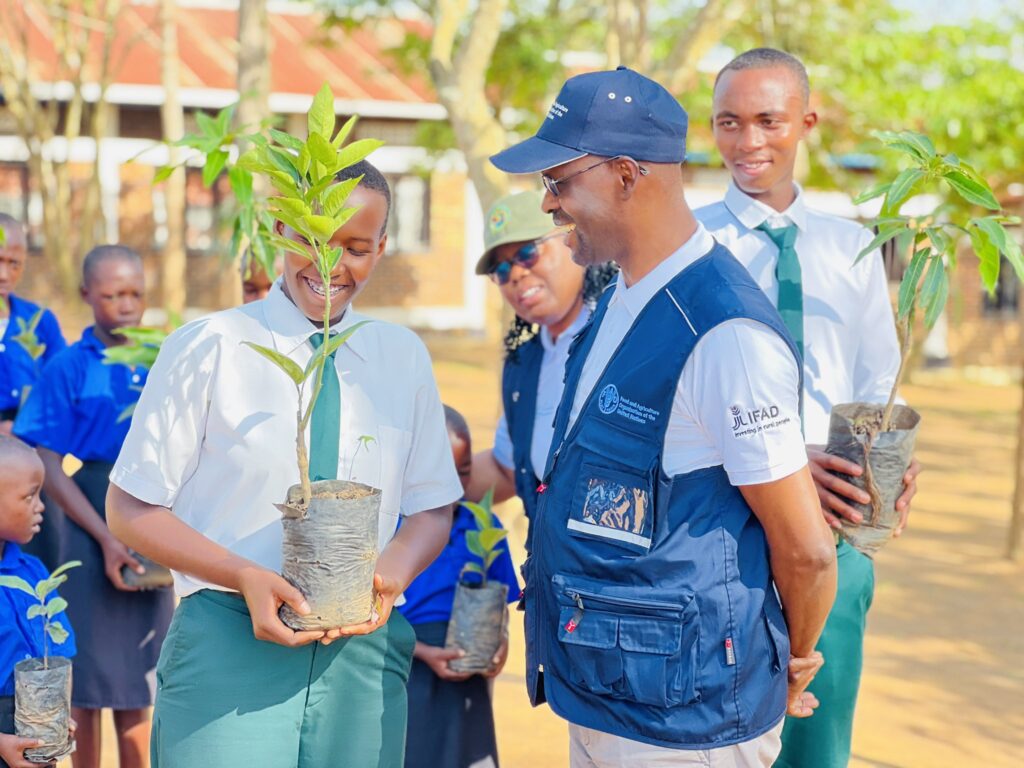
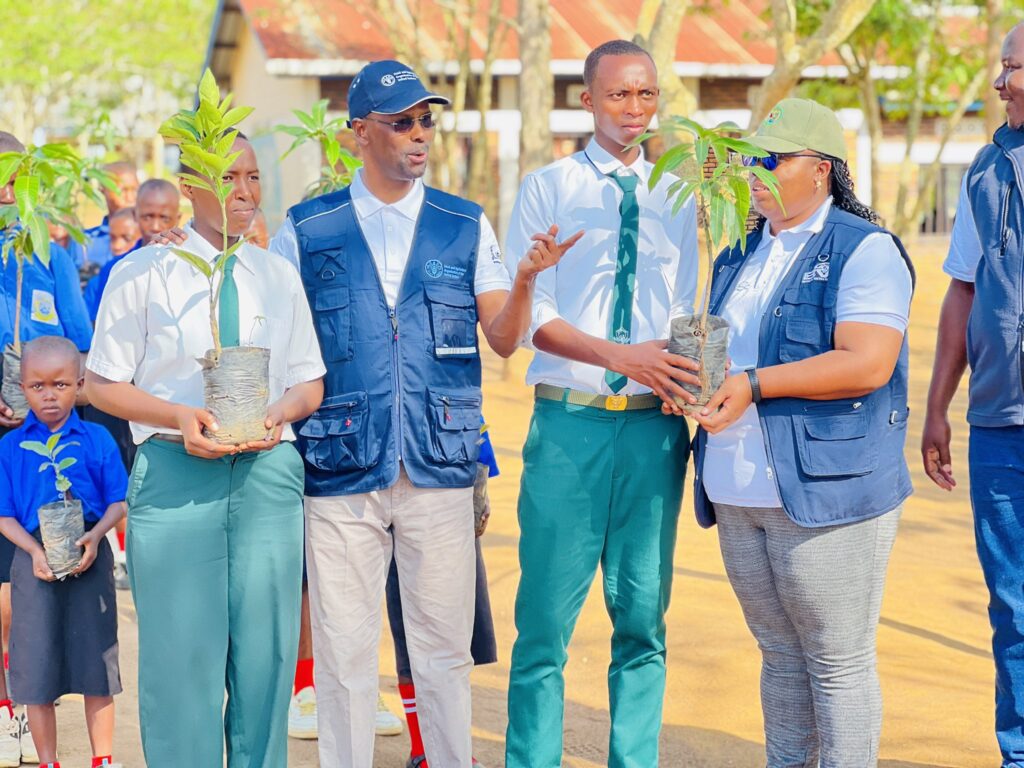
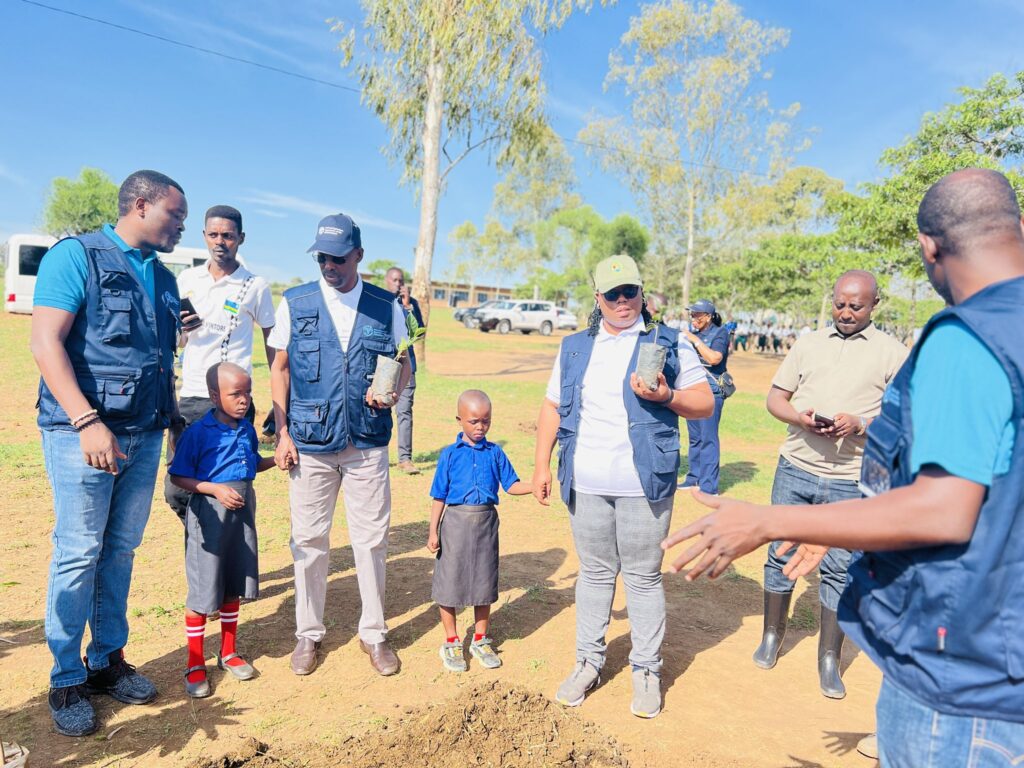
Nyagatare District has launched an initiative to plant 10,000 fruit trees in 25 schools, starting at GS Nyarupfubire, where 530 trees were planted. The initiative aims to improve students’ nutrition, protect the environment and build a sustainable future.
The activity was organised as part of preparations for the national celebration of World Food Day. It was attended by Mohamed Aw-Dahir, the Food and Agriculture Organization of the United Nations (FAO) Representative in Rwanda, local government officials, teachers and students.
Aw-Dahir said the fruit trees would help improve the school environment and, once mature, provide fruits that could benefit students and other members of the school community.
He emphasised that planting trees should not end with putting them in the ground, but should be followed by proper care to ensure they grow well and achieve their intended purpose.
“We all have a responsibility to protect the environment so that we can build a better future for ourselves and leave it in good condition for future generations,” he said.
Some students at GS Nyarupfubire said caring for the trees would be a shared responsibility between students and teachers, adding that proper maintenance would enable the trees to grow and eventually produce fruits.
Mugabo Hertier, a Senior Two student, said the fruit trees would bring significant benefits to the school once they begin producing fruit.
“They will be very beneficial to us because, when the trees start producing fruit, we will be able to eat fruit as part of our meals at school. This will also improve our health because fruits contain vitamins,” he said.
Mugabo added that trees also serve other purposes, including reducing the impact of strong winds and making the school environment more attractive.
Nkurunziza Ibrahim, a teacher at GS Nyarupfubire, described the initiative as a valuable opportunity and said he expected it to bring positive changes, including a cleaner and healthier environment.
He added that the fruit trees could help address poor nutrition among children by providing access to different varieties of fruit. He also encouraged fellow teachers to take ownership of the initiative and lead by example in caring for the trees.
“These trees will give us an opportunity to teach students about the importance of environmental protection and help them develop it as a habit. We will encourage students to take care of them and monitor their growth to ensure that this initiative delivers lasting benefits,” he said.
The initiative will continue across all 14 sectors of Nyagatare District.
Nyagatare District Vice Mayor in charge of Economic Development, Gozague Matsiko, assured residents that the initiative would also extend beyond schools, with plans to distribute fruit trees to community members.
“We will continue with this initiative, planting trees, particularly fruit trees, at least once every school term. This will help us address malnutrition in the district. We also have plans to reach residents and provide them with fruit trees,” he said.
Dr Solange Uwituze, Minister of State in the Ministry of Agriculture and Animal Resources, said the initiative was not limited to Nyagatare District but would be extended across the country.
She urged the management of GS Nyarupfubire to take proper care of the trees and ensure they are protected and put to productive use.
“As the saying goes, a wise child builds on what they have been taught. We urge you to ensure that we do not return to find that the trees have been neglected, destroyed by the sun or eaten by livestock,” she said.
The fruit tree planting initiative combines environmental conservation with efforts to improve nutrition, as the trees are expected to provide fruit for school communities once they mature. However, achieving these benefits will depend on proper maintenance, including watering and protection against damage, depending on the type of tree and the conditions in which it is planted.
Figures announced under the initiative indicate that 10,000 fruit trees are planned for 25 schools, with 530 trees planted at GS Nyarupfubire to mark the launch. The programme will continue across all 14 sectors of Nyagatare District.

 RUSAGARA MUVUNANKIKO Valens
 Muhire Obed