
 RUSAGARA MUVUNANKIKO Valens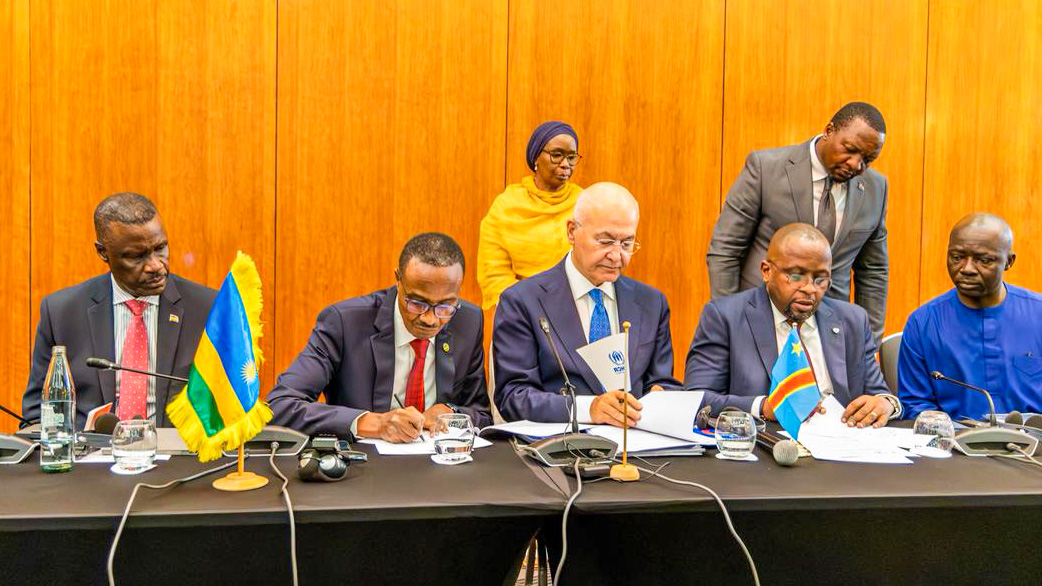
The governments of the Democratic Republic of the Congo (DRC) and Rwanda together with the United Nations refugee agency (UNHCR), have adopted a new roadmap aimed at accelerating the voluntary return and reintegration of refugees between the two neighboring countries.
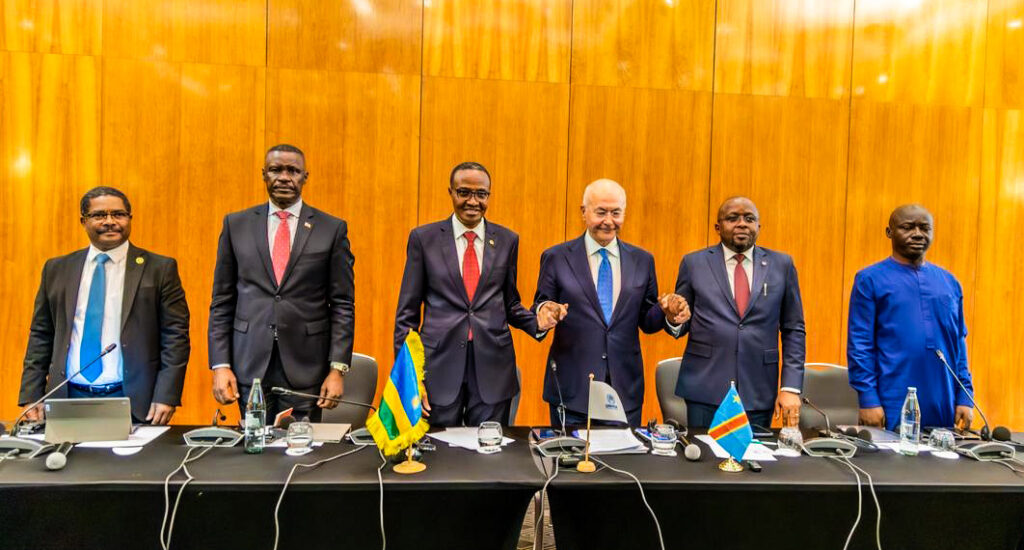
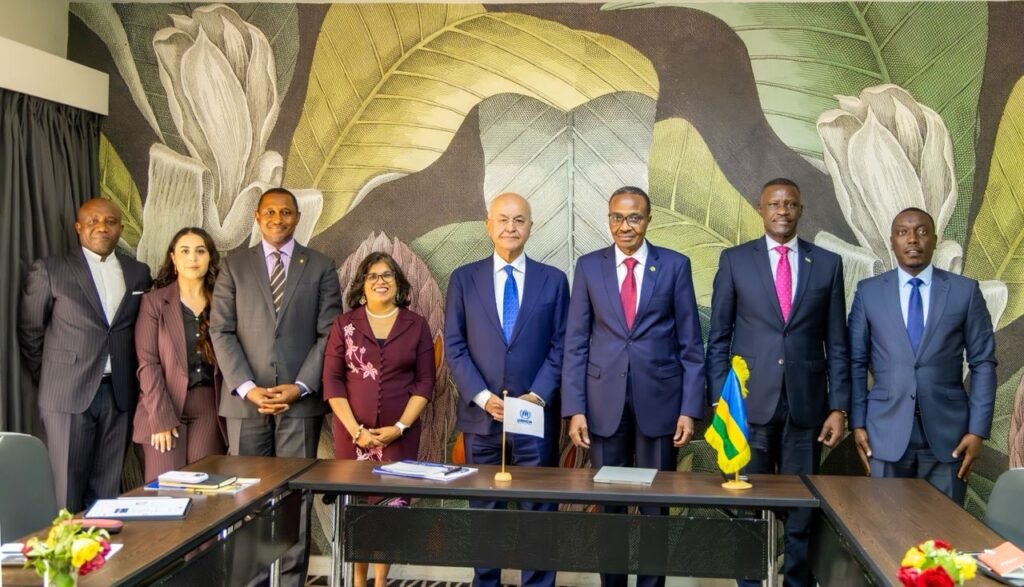
The agreement was reached during a high-level ministerial meeting held in Addis Ababa, Ethiopia where the three parties signed a joint communiqué reaffirming their commitment to ensuring that refugee returns are voluntary, safe, dignified and informed.
The meeting was held under the framework of the 2010 Tripartite Agreements on refugee repatriation and builds on previous commitments made in July 2025, when the two countries and UNHCR renewed efforts to promote durable solutions for displaced populations.
According to the communiqué, the parties adopted the 2026–2027 Tripartite Technical Working Group Roadmap on Voluntary Repatriation and Reintegration, which outlines operational responsibilities, timelines and monitoring mechanisms for refugee returns.
The document notes that the DRC currently hosts 196,289 Rwandan refugees and asylum seekers, including 75,421 who have been biometrically registered, while Rwanda hosts 84,456 Congolese refugees and asylum seekers.
Officials reaffirmed that voluntary repatriation remains a key element in promoting peace, stability and long-term recovery in the Great Lakes region.
“The parties reaffirmed their commitment to the voluntary, safe, dignified, and informed return of refugees,” the communiqué states.
The meeting also reviewed progress made over the past year. Since January 2025, 8,394 Rwandan refugees have voluntarily returned from the DRC to Rwanda, including 2,347 in 2026 alone. The parties said they aim to facilitate the return of approximately 10,000 people during 2026.
While voluntary returns from the DRC to Rwanda have continued, repatriation of Congolese refugees living in Rwanda has not yet begun.
To address this, the DRC agreed to identify priority areas of return beginning in October 2026, based on surveys conducted among refugees and information provided by Rwandan authorities.
The three parties also agreed to hold quarterly cross-border coordination meetings, with the first scheduled for September 2026.
In addition, the border crossing between Kamanyola in South Kivu and Bugarama in Rwanda will be used to facilitate the return of more than 3,600 Rwandan refugees currently living in southern parts of South Kivu and who have expressed willingness to return home.
The meeting took place against the backdrop of broader diplomatic efforts to improve relations between Kigali and Kinshasa and stabilize eastern DRC.
The communiqué specifically referenced the Peace and Prosperity Accords signed between Rwanda and the DRC in Washington in December 2025. It also highlighted the continued support of the African Union, the United Nations and the UN Secretary-General’s Special Envoy for the Great Lakes Region.
UNHCR welcomed the renewed cooperation, describing refugee repatriation as an important component of peacebuilding efforts.
In a statement following earlier tripartite discussions, the agency said it remains committed to helping create conditions that allow refugees to “return home in safety and dignity.”
Despite the progress, humanitarian agencies continue to warn that conditions in parts of eastern DRC remain fragile due to insecurity and displacement caused by armed conflict.
The region has experienced years of violence involving numerous armed groups, leading to one of Africa’s largest displacement crises. Millions remain internally displaced, while hundreds of thousands continue to seek refuge in neighboring countries.
Refugee advocates have also stressed that repatriation must remain genuinely voluntary and accompanied by adequate reintegration support, security guarantees and access to basic services in return areas.
The DRC, Rwanda and UNHCR are expected to meet again in June 2027 to assess progress and determine the next phase of the repatriation process.