
 RUSAGARA MUVUNANKIKO Valens

Rwanda’s Parliament has erected a new monument honouring employees of the former Conseil National de Développement (CND).
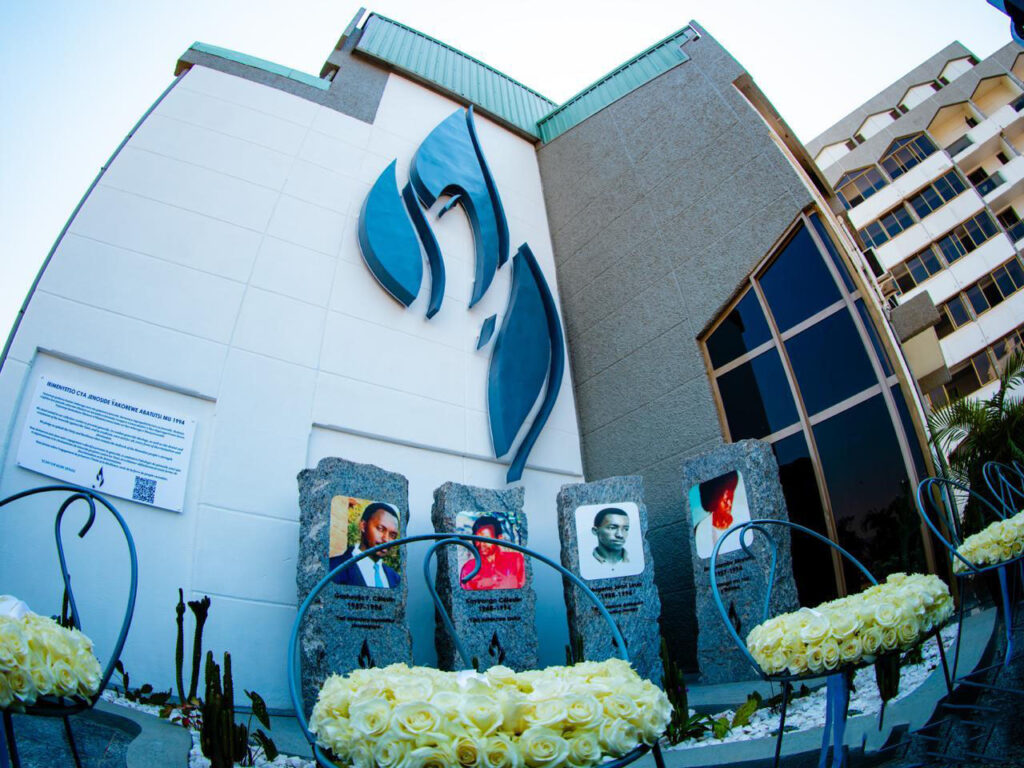
The monument pays tribute to four former CND staff members whose lives were cut short during one of the darkest chapters in Rwanda’s history. It also serves as a powerful reminder of the devastating consequences of genocide ideology, discrimination and divisionism, while reaffirming the country’s commitment to unity and the promise of “Never Again.”
According to Parliament, the memorial stands as an enduring witness to the atrocities committed during the Genocide against the Tutsi and encourages every visitor to reject all forms of hatred, discrimination and ethnic division.
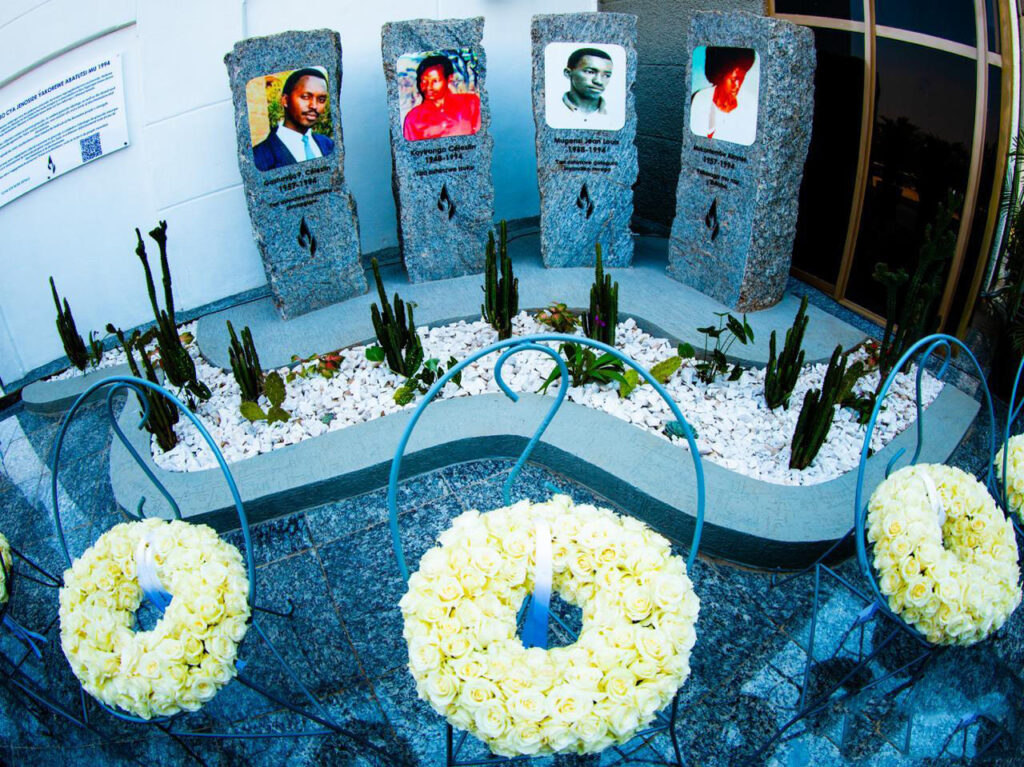
The monument commemorates Pierre Célestin Gashayija, Célestin Kayiranga, Jean Louis Mugenzi, and Aloysie Mukantembe, all employees of the CND who were killed during the Genocide against the Tutsi.
Gashayija, who worked as an officer responsible for recording parliamentary plenary proceedings, was killed at the notorious “40” roadblock after fleeing his home in Gatenga in search of safety. His body was never recovered.
Kayiranga, a cleaning attendant at the CND, sought refuge among neighbours in Kimisagara before being captured and killed at a roadblock on 9 April 1994. His remains have also never been found.
Mugenzi served as a Hansard Reporter and was murdered at a roadblock in Gikondo-Nyenyeri, where he lived. Unlike many victims, his body was recovered and laid to rest at the Kigali Genocide Memorial in Gisozi.
Mukantembe, a documentation officer in the CND library, was killed in a grenade attack in Gikondo’s Camp Zaïre neighbourhood alongside her husband, three children and two younger sisters. Her youngest child was only six months old at the time. None of their bodies were recovered.
The memorial has been designed around four symbolic elements, each carrying a distinct message for visitors.
The Message Wall calls on present and future generations to prevent genocide, confront genocide ideology and reject denial and revisionism while promoting national unity.
Four towering stone pillars represent the four former CND employees killed during the Genocide. Their size and natural form symbolise permanence, dignity and the immense weight of the history they represent.
A quiet memorial garden, planted mainly with cacti, provides a space for reflection. Parliament says the cactus was chosen because it thrives under harsh conditions, symbolising resilience, endurance and Rwanda’s recovery after the Genocide against the Tutsi.
Completing the memorial is the Flame of Hope, representing the country’s determination to continue building a future founded on unity, resilience and prosperity despite the painful legacy of genocide.
Beyond commemorating individual victims, the monument also recalls the discrimination experienced by Tutsi employees within the former CND before the Genocide.
Testimonies from former staff reveal that many Tutsi employees endured exclusion, humiliation and psychological abuse both in the workplace and in their personal lives, demonstrating how genocide ideology had taken root even within public institutions.
Despite facing persecution, the victims continued to perform their duties with professionalism and treated colleagues with respect and kindness.
Parliament says preserving the memory of the victims is essential to safeguarding historical truth and preventing future generations from forgetting the consequences of hatred and division.
As Rwanda continues to commemorate the victims of the 1994 Genocide against the Tutsi, the new monument stands not only as a tribute to those who lost their lives but also as a lasting symbol of the nation’s commitment to unity, resilience and ensuring that such atrocities never happen again.



 Muhire Obed